A look back at nine years of collaboration with the Nexans Foundation
On the occasion of the tenth anniversary of the Nexans Foundation, Geres was invited to testify on the last nine years of partnerships. A retrospective.
Congratulation to the Nexans Foundation for its ten years of existence, nine of which have been supporting Geres: this is no mean feat!
As a reminder, the Nexans Foundation‘s mission is to accompany and support solidarity initiatives throughout the world which particpate to the reduce fuel poverty and insecurity for the past ten years.
Energy poverty : a common cause
It’s in 2014 that the adventure begins… This collaboration stems from a common cause : the fight against energy poverty in the world. And the main goal goal of Geres is to act on the ground to promote a fair and ambitious energy transition.
Nexans : a real support for Africa
In West Africa
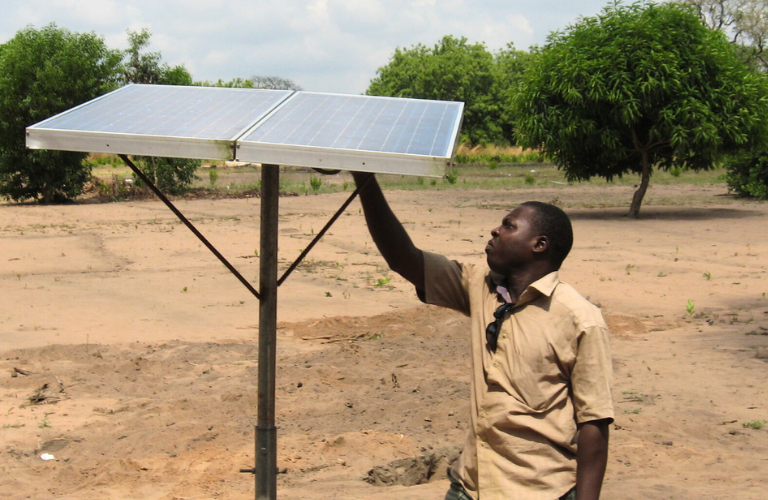
Nexans has always actively supported our project in West Africa on access to electricity to develop the economy in rural areas, including the three pilot projects, which allowed the construction of the three first Green Business Areas (Konséguéla, Pep Koury and Kita) in Mali.
See article on access to sustainable energy for all in Mali.
This GBA have proven their eefectiveness and are currently being deployed.
Then, in 2022, they will join us in Togo, a new territoy for the Geres, to realised a diagnostic of energy needs and set up a pilot action around access to energy for the development of economic activity and capitalize on the Mali experience.
In North Africa
Moreover, they have also supported us in Morocco on energy transition projects, via the deployment of an energy-climate service , a training, information and awareness tool around energy and climate issues.
See the article on ChefChaouen, towards a model sustainable city.
On May 3, 2023, we had the joy of celebrating the tenth years of Nexans Foundation,and therefore of celebrating the associations that act on the ground, and especially GERES.
The partnership GERES/Nexans is one of the longest and most successful of the Foundation, with total alignement on a holistic approach to energy access for the disadvantaged population, combining the environmental imperative, the social impact and the sustainability of the proposed economic model.
A perfect illustration of this is the project carried by GERES in Mali with the GBA’s launch, a pilot project that has proved it’s relevance, and which GERES is now deploying in new areas.
It’s all the issue of the Nexans Foundation, to accompagn innovative projects, novate, particulary in social and environemental impact, to make evoluate these acces energy models.
We have full confidence in GERES to keep innovate and to surprise us! Congratulations to all the GERES teams!
Climate solidarity in news
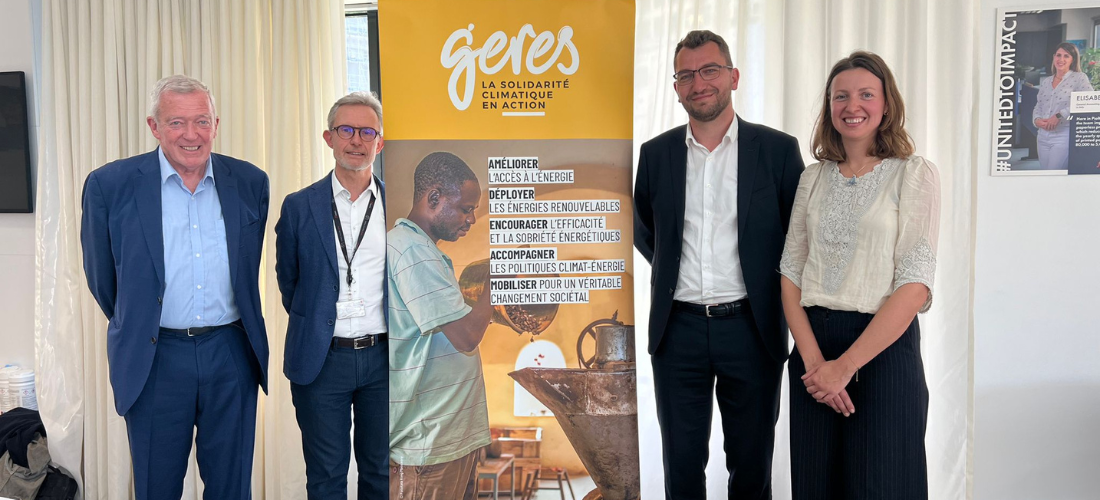
A look back at nine years of collaboration with the Nexans Foundation
On the occasion of the tenth anniversary of the Nexans Foundation, Geres was invited to testify on the last nine years of ...
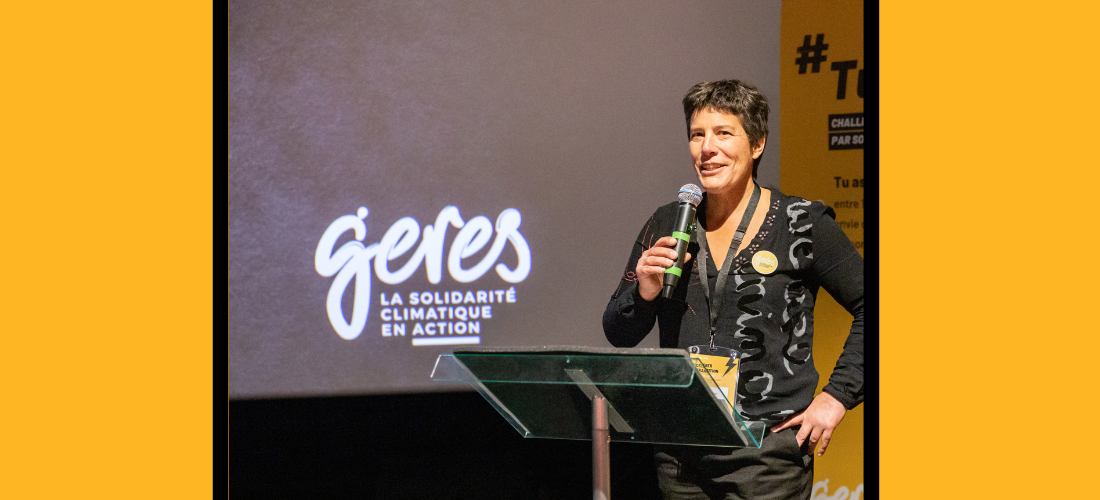
Laurence Tommasino : “In 2023, our challenge will be to step up our efforts to adapt our operating methods to different geopolitical contexts”
As we start the New Year, it's time to take stock. Laurence Tommasino, Geres executive director, tells us about the highlights for ...
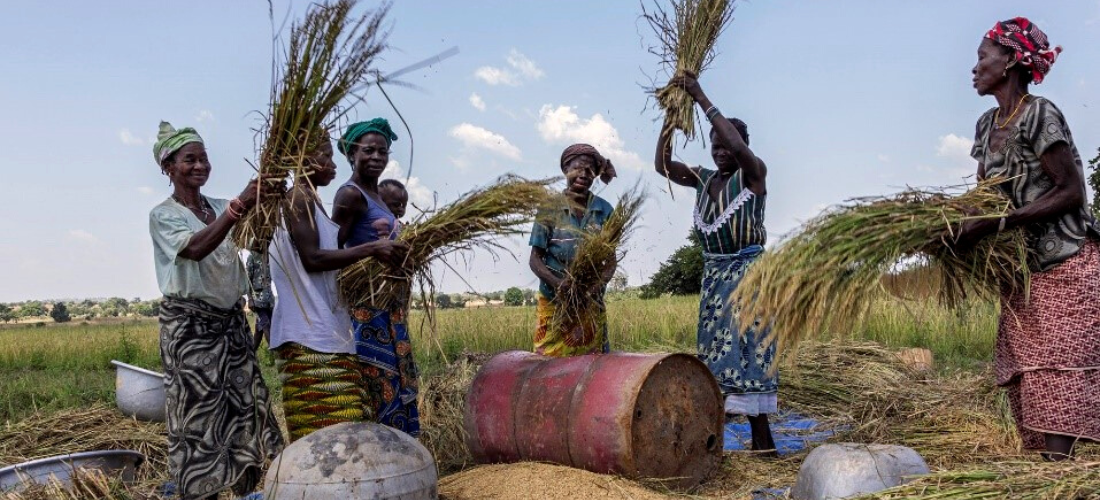
Geres is opening an office in Burkina Faso: interview with Carole Dehu, Geres country representative
It's a first: Geres is moving into Burkina Faso. We find out what's happening from Carole Dehu, Geres country representative. ...
YOU WANT TO ACT IN FAVOR OF CLIMATE SOLIDARITY AND SUPPORT OUR ACTIONS?
Tell us who you are and find out what you can do
CITIZENS
Parce que la Solidarité climatique est l’affaire de toutes et tous, le Geres vous donne les clés pour passer à l’action.
PRIVATE SECTOR
En tant que dirigeant·e d’entreprise, employé·e ou client·e responsable, vous avez le pouvoir d’agir au quotidien.
LOCAL & INSTITUTIONALS ACTORS
Soutenez nos actions en France et à l’international et devenez un acteur de la Solidarité climatique.
FOUNDATIONS
En vous engageant aux côtés du Geres, vous contribuez à la mise en œuvre d’actions innovantes et concrètes.
The post A look back at nine years of collaboration with the Nexans Foundation appeared first on Geres.
]]>The post Combating energy poverty: why are women on the front line? appeared first on Geres.
]]>Combating energy poverty: why are women on the front line?
Maëva Bréau is project and gender advocacy officer for the international eco-feminist network Women Engage for a Common Future (WECF) and Marie-Maud Gérard is energy, building and solidarity programme officer for the international NGO Geres.
Together, they take a look at the challenges faced by women in the fight against energy poverty and the means of action they are trying out, especially via the EmpowerMed programme to which they and other stakeholders are contributing.
Marie-Maud Gérard
Having worked for Geres for several years, as energy efficiency adviser and then leader of the Energy & Environment project, I am now in charge of the Energy, Building and Solidarity Programme. In particular, my role within Geres Europe Mediterranean team is to develop and implement projects designed to bring about an inclusive, supportive energy transition: combating energy poverty, involving residents in energy sobriety initiatives, mobilizing local stakeholders and enhancing their skills to ensure that no one is left out of this vitally important energy transition.
Maeva Bréau
I have been project and gender advocacy officer with WECF France for around four years. There are two aspects to my role: co-ordinating projects run at international level by our field partners who strive on a daily basis to strengthen and obtain recognition of women’s place in the fight against the effects of climate change in their countries, while at the same time engaging in awareness and advocacy campaigns for more inclusive climate policies reflecting women’s particular needs and concerns. This work draws on our partners’ expertise and field knowledge.
In what way are energy poverty and gender inequality issues connected?
Maëva Bréau
As Marie-Maud has noted, energy poverty is connected with social and economic vulnerability. In France and Europe more generally, women run a greater risk of living in poverty, for many different reasons relating to the stereotypical division of roles between women and men within households.
Even today, women are paid 28.5% less than men for the same hours of work and they are also over-represented in part-time contracts or “unpaid” work (domestic chores, caring for older family members or children, etc.). This will have a significant impact on their pensions in later life.
Moreover, women live longer than men and are over-represented as heads of single-parent households, with responsibility for childcare. The accumulation of these effects means that, in 2017, 17% of women-headed households were experiencing energy poverty as against 10% of the general population.
Alongside these economic and socio-cultural aspects, there are also differences in physiology (women are more sensitive to heat and cold) and impact in terms of mental and physical health (many vascular and respiratory diseases are caused by domestic pollution).
ECO-FEMINISM is a word we hear at WECF, but how can we define it?
Maëva Bréau
There is no consensus over the definition of eco-feminism, but the concept nevertheless rests on a commonly acknowledged fact: that there are indissociable links between the domination of nature and the domination of women in our capitalist system.
Eco-feminism is therefore an intersectional political and philosophical movement, which is also based on fighting for the ideal of a circular, participatory, self-managed society of direct democracy, opposed to all hierarchies (of sex, class, ‘race’, origin and so on) and to the mass exploitation of our natural resources and people.
In practice, it means bringing social justice and gender concerns to bear on all environmental issues.
Do you have any figures about the situation in France and the Mediterranean as a whole?
Marie-Maud Gérard
In Europe, it is estimated that more than 57 million people suffer from the cold in winter and 104 million from the heat in summer, while 52 million are behind with payment of their energy bills.
In France, according to the latest figures from the National Energy Poverty Observatory, 20% of French people suffered from cold for at least twenty-four hours over the 2020-2021 winter, over a third of them for financial reasons.
Statistics specifically showing the number of women affected by this phenomenon are almost non-existent at present, underlining the importance of the EmpowerMed programme.
So, can you tell us what the “EMPOWERMED” programme is about and what changes you hope it will make? Especially when it comes to advocacy?
Marie-Maud Gérard
EmpowerMed is a consortium involving 9 European partners and projects in 6 countries around the Mediterranean, from Spain to Albania.
EmpowerMed aims both to develop ways to combat energy poverty in the field, by involving and strengthening households, starting with women who are affected to a greater extent, and to build on the results obtained to come up with recommendations for advocacy from local through to European level.
The focus of the project’s advocacy is to defend a Mediterranean vision of the fight against energy poverty, including by helping to keep everyone comfortable at home in the summer and highlighting the role of women as vectors of change.
The policy recommendations of EmpowerMed put forward a more inclusive definition of energy poverty, encourage a greater focus on the link with gender and especially the development and monitoring of indicators revealing this problem (numbers of women affected, number of women among the beneficiaries of the aid provided, as well as numbers of young people, people with disabilities, etc.).
Also worth reading : escaping energy poverty in the Provence-Alpes Côte d’Azur region
Maëva Bréau
For my part, I can see a twofold objective for the EmpowerMed project:
- Improving the living conditions of those most affected by energy poverty, which has been done by means of workshops offering easy to apply advice and by studying and reporting on the kinds of aid and subsidies available to help with the housing energy transition; while
- Mobilizing policymakers at local, national and international level to include all the dimensions of energy poverty (gender, health, etc.) in strategies to combat these problems.
Policies are still far too “gender blind”, but how can fair strategies and policies be drawn up if the needs and specific concerns of half the population are not taken into account?
And what is the score now?
Marie-Maud Gérard
As of today, more than 400 people have already benefited, in Marseille, from support under the EmpowerMed project, including more than 250 women.
Which means:
- information to check that their energy deals are suitable;
- changes in energy supplier;
- installation of energy-efficient appliances in homes;
- personalized advice on possible work to be carried out;
- approaching landlords to suggest housing improvements; and
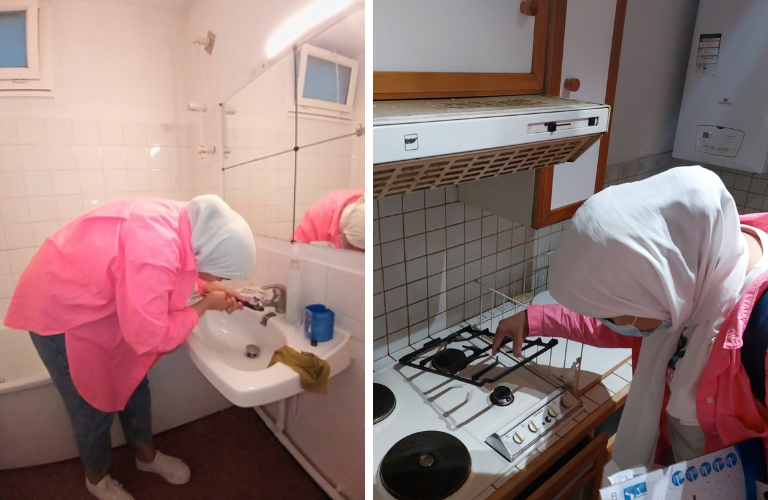
- beyond the project, carrying out essential works for households encountering difficulties in terms of thermal comfort: installation of ceiling fans, plumbing repairs, insulation of heating pipes, improvements in ventilation and so on
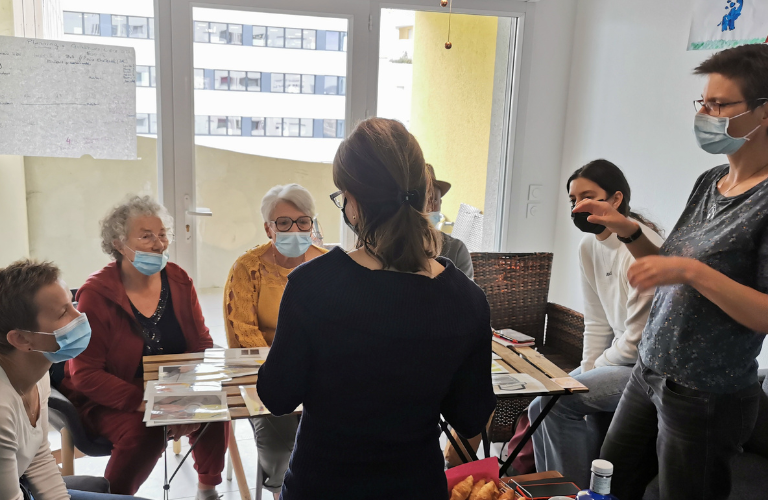
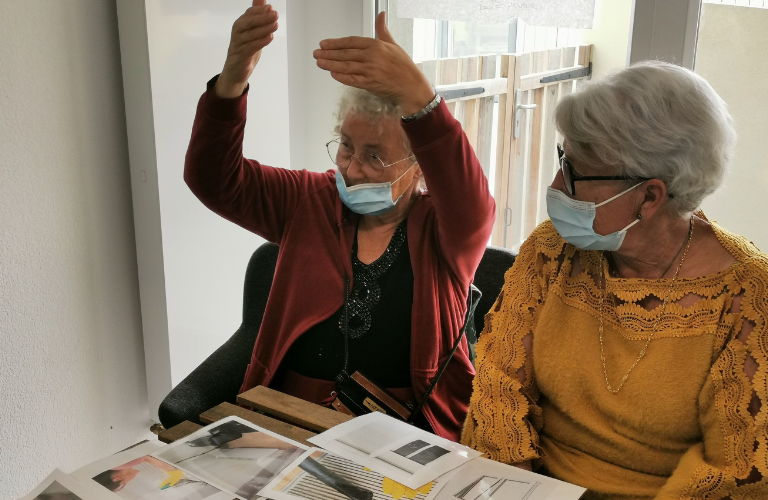
To give a concrete example: a retired woman, living alone in a house in an urban area, told us during a collective workshop entitled “health and energy in my home” that she was suffering because the air in her house was too humid and she also had high energy bills despite her efforts to economize.
This led us to carry out an energy advice visit and suggest work to install a simple ventilation system and lag her heating pipes in an unheated part of her home. Humidity was reduced by 20% immediately and she was really pleased that her energy bills would go down. We shall contact her in the near future to check on her bills.
The project is currently in the phase of evaluation of field operations and advocacy to get things moving in the direction of a more inclusive energy transition at local, national and European level.
A few words in conclusion? A call for mobilization?
Marie-Maud Gérard
Support Geres! You can also join Geres volunteers taking part in action to mobilize for a more inclusive energy transition.
Maëva Bréau
If you would like to support WECF France, you can follow us on our website and social media, talk about our activities to people around you and join our association!
WOULD YOU LIKE TO TAKE ACTION
AND SUPPORT WHAT WE DO?
Tell us who you are and find your means of action.
CITIZENS
Because Climate Solidarity is a challenge we face collectively, Geres gives you the possibility to make a difference. TAKE ACTION AS A CITIZENPRIVATE SECTOR
As a business executive, an employee or a customer, you have the power to take action in your everyday life. TAKE ACTION AS A COMPANYLOCAL AND INSTITUTIONAL ACTORS
Support our actions in France and internationally and become an agent of change at our side. TAKE ACTION AS AN INSTITUTIONFOUNDATIONS
By supporting Geres, you contribute to the implementation of innovative and concrete actions. TAKE ACTION AS A FOUNDATIONVOUS SOUHAITEZ AGIR EN FAVEUR DE LA SOLIDARITÉ
CLIMATIQUE ET SOUTENIR NOS ACTIONS ?
Dites-nous qui vous êtes et découvrez vos moyens d’action
CITOYEN·NE·S
Parce que la Solidarité climatique est l’affaire de toutes et tous, le Geres vous donne les clés pour passer à l’action.
ENTREPRISES
En tant que dirigeant·e d’entreprise, employé·e ou client·e responsable, vous avez le pouvoir d’agir au quotidien.
INSTITUTIONS & COLLECTIVITÉS
Soutenez nos actions en France et à l’international et devenez un acteur de la Solidarité climatique.
FONDATIONS
En vous engageant aux côtés du Geres, vous contribuez à la mise en œuvre d’actions innovantes et concrètes.
The post Combating energy poverty: why are women on the front line? appeared first on Geres.
]]>Geres facilitates access to energy and energy efficiency for low-carbon development in Benin
In 2023, a new project is being launched in Benin to enable small local businesses to develop their activities in rural areas through access to electricity and improved cooking stoves. Overview.
Access to electricity, an essential vector for rural development in Benin
In Benin, a small proportion of the rural population (18%) has access to electricity, compared to a large proportion of the urban population (66%). At Geres, we believe that developing the rural economy promotes local stability and equity.
Access to clean renewable energy can therefore be a solution, but rural electrification programs through mini-grids (limited power generation centers) do not always meet the needs of local artisans (who use electricity for business purposes). In addition, the processing of agricultural products still relies on polluting and inefficient cooking or smoking technologies, which create health problems for women and put great pressure on natural wood resources.
Based on Geres’ expertise in Zones d’Activités Électrifiées (present in several countries), ARESS’ expertise in mini-grids and solar kits, and IDID’s experience in supporting rural entrepreneurs, the objective of this new project is to promote low-carbon development in rural areas of Benin through access to energy and energy efficiency for productive activities.
Also read: Our project for sustainable energy access for all
The project should improve the situation of entrepreneurs by increasing their income. To consolidate 40 direct jobs and 60 indirect jobs (access to electricity), including those of 2,000 women who are members of women’s food processing groups (clean and efficient cooking). On the environmental side, the challenge will be to reduce the carbon emissions emitted by these productive activities, which is about 17,000 eqT CO².
Access to electricity and sustainable cooking at the heart of the beninese project
Initiated in 2023, the project is scheduled to last three years. The program has two main components: access to electricity centered around one commune where a mini-grid will be set up (Idajo, commune of Ouéssé) and access to cooking stoves for professionals covering 5 communes.
A territorial energy diagnostic will be conducted to identify the users and the specific needs of Very Small Enterprises (VSE), as well as the local offer of solutions. It will also identify the barriers to entrepreneurship for women.
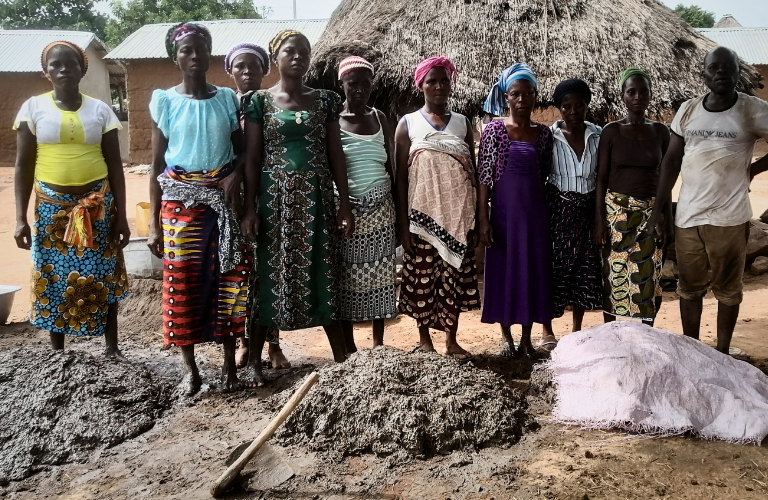
Women food processors in the front line of the project
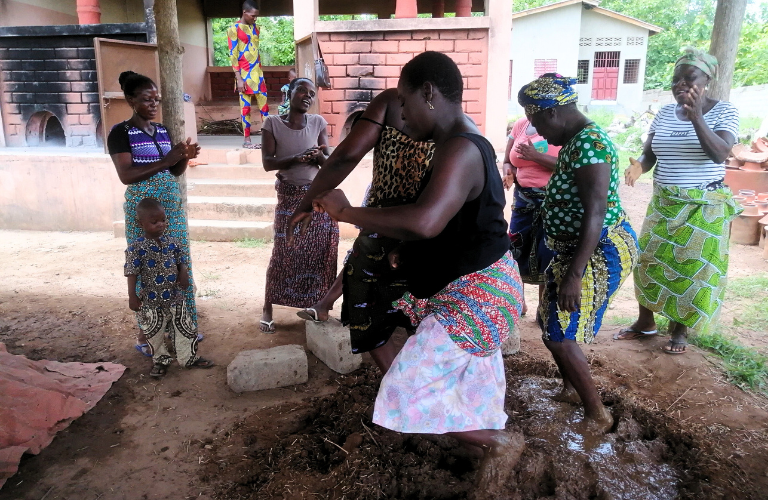
Beninese women processors are the first to be affected by the pollution created by their cooking technology. It is therefore essential that they have access to efficient technical energy solutions to reduce wood and energy consumption and improve their sanitary conditions.
In addition, Geres’ teams will support the economic development of these entrepreneurs to maximize the impact of improved cookstoves by strengthening their production and distribution. The transformers will be trained in sales and entrepreneurship. A model that has already proven itself in other Geres development projects abroad. Finally, a system for monitoring the distribution and use of the stoves will be set up, with the aim of including this sector in a carbon finance project.
For an efficient access to electricity, several possible energy solutions
It is important to know that here, access to electricity via technical solutions for productive actors is first done by a feasibility study. This induces an analysis of the solutions adapted to each VSE, of their financing and investment.
For the moment, different options are being considered:
- a ZAE (electrified activity zone) that can accommodate about ten MSEs
- Specific solutions for each user with a connection to the existing mini-grid
- Individual solar kits
Support and training: an essential part of making the project sustainable
Then there is the support to the craftsmen (20 VSEs) so that they take full advantage of the adopted energy solutions. To do this, the collaboration with IDID (a Beninese NGO with a strong experience in supporting entrepreneurs in agro-ecology) will provide support to the various users.
Several business trainings, financial intermediation with Microfinance Institutes (MFIs) as well as a consolidation of the inclusive dimension by taking into account the constraints of Beninese entrepreneurs in rural areas will be implemented.
It should be noted that personalized support will also be provided according to the needs and desires of each entrepreneur. In total, 20 entrepreneurs and 108 groups of women food processors will benefit from this project.
See you in a few months to follow the progress!
VOUS SOUHAITEZ AGIR EN FAVEUR DE LA SOLIDARITÉ
CLIMATIQUE ET SOUTENIR NOS ACTIONS ?
Dites-nous qui vous êtes et découvrez vos moyens d’action
CITOYEN·NE·S
Parce que la Solidarité climatique est l’affaire de toutes et tous, le Geres vous donne les clés pour passer à l’action.
ENTREPRISES
En tant que dirigeant·e d’entreprise, employé·e ou client·e responsable, vous avez le pouvoir d’agir au quotidien.
INSTITUTIONS & COLLECTIVITÉS
Soutenez nos actions en France et à l’international et devenez un acteur de la Solidarité climatique.
FONDATIONS
En vous engageant aux côtés du Geres, vous contribuez à la mise en œuvre d’actions innovantes et concrètes.
The post Geres facilitates access to energy and energy efficiency for low-carbon development in Benin appeared first on Geres.
]]>In Ulaanbaatar, our actions to fight against air pollution are extended until 2026
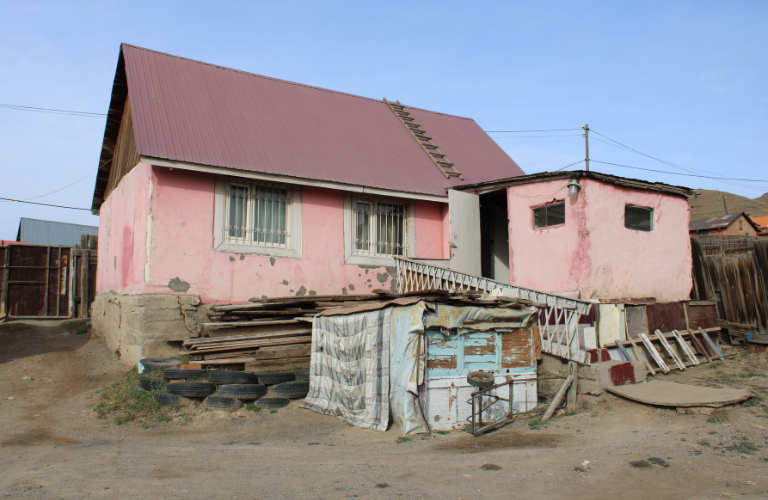
Ulaanbaatar is the most polluted city in winter. Since 2018, Geres and its partners with the support of the EU-funded Switch Asia program have been working to reduce the city’s air pollution by tackling housing insulation and promoting the reduction of coal consumption for heating. Four years later, the results are very conclusive. Now it’s time for 2026 to extend the actions to other provinces.
Here is an overview and outlook.
Context. The 8-month long heating season, temperatures hitting for several months -20 to -40°C and the absence of central heating systems for more than half of the urban population force them to rely on cheap and low-quality coal for satisfying household heating and cooking needs. On the other hand, in recent years the population has also started to exploit a coal that generates less smoke but a lot of pollution.
Building on Geres’ 20 years of experience in Asia’s cold climate, the project « Switch off Air pollution » was implemented between 2018 and 2022 in the mongolian capital.
For the summary, “Switch off air pollution” project is a coordinated initiative led by Geres with People in Need, the Mongolian National Construction Association and Building Energy Efficiency Centre for the national university, in close collaboration with bank suppliers, aiming at equipping communities and private sector with the tools to curve air pollution in Mongolia.
To begin the project, Geres produced a baseline study in 2018. The aim : collect and assess the thermal performance of the exterior envelopes, heating system and indoor air quality asessment of 178 houses in ger area. According to the study, 60% of the population felt cold only 31% felt normal and 9% warm during winter. Furthermore, 45% of the population said that they had no insulation et 55%, partial insulation.
To top it all off, the residents told us that they insulated their homes themselves.
From these observations, Geres team has set up : 1 rst a set of insulation solutions (roof, wall, foundations, windows, ..), with parteneship with suppliers and training of MSMEs to implemented in market based approach.
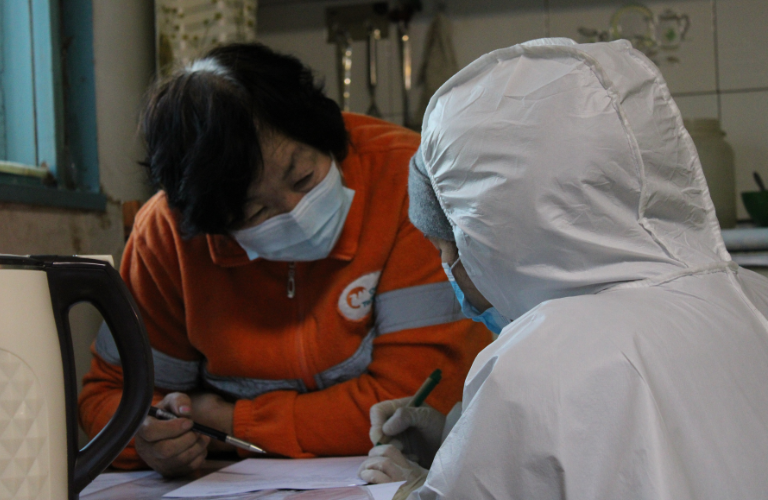
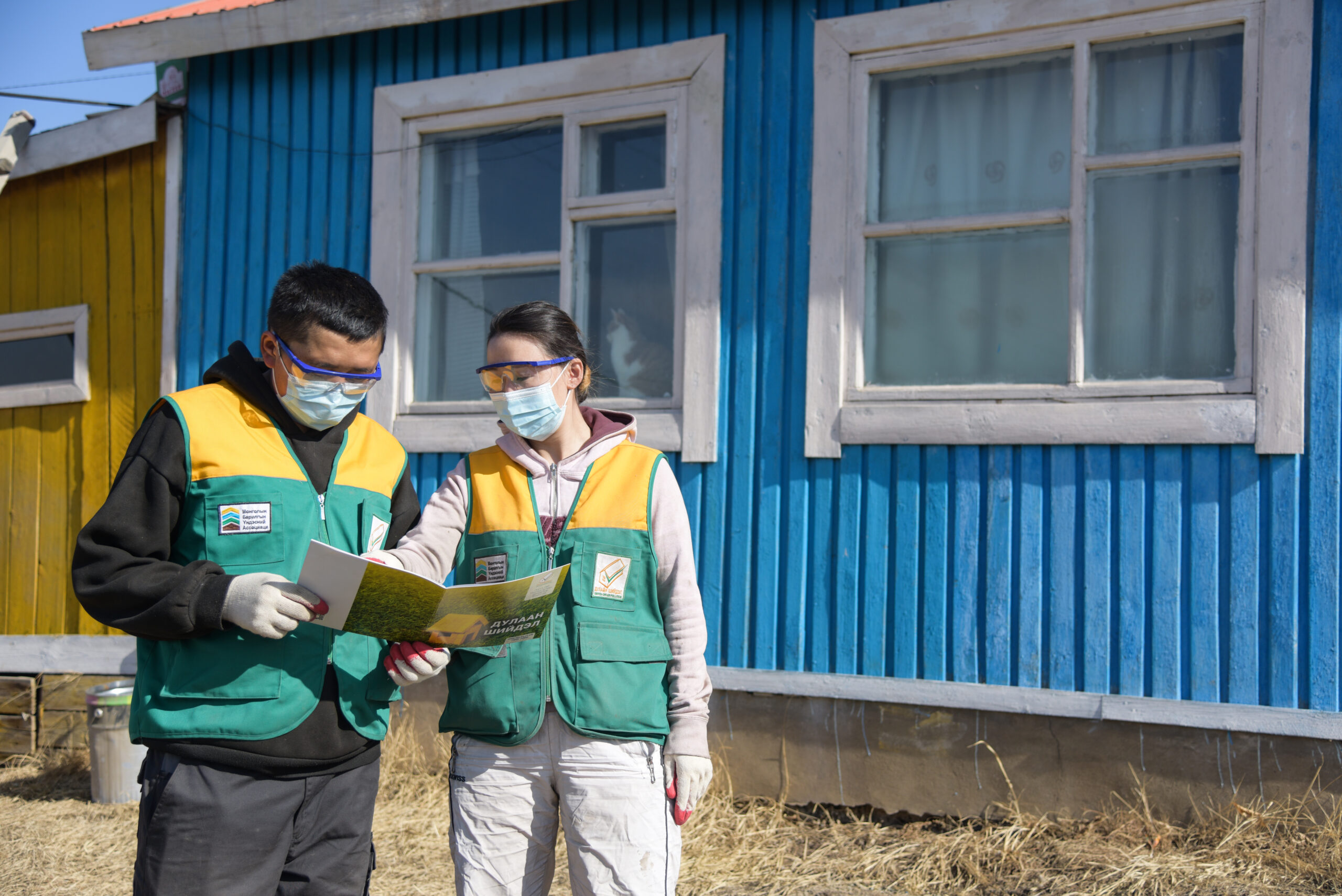
Even though the insulation solution are affordable, still some people cannot afford it , and/or don’t know about advantages of insulation that why the project design and implement simple solutions campaign in the area. Indeed, a « Simple Solutions », easy and affordable “Do It Yourself” insulation solutions, campaign was launched, reaching people through community engagement to create awareness of the importance of insulation and provide basic knowledge of proper insulation techniques.
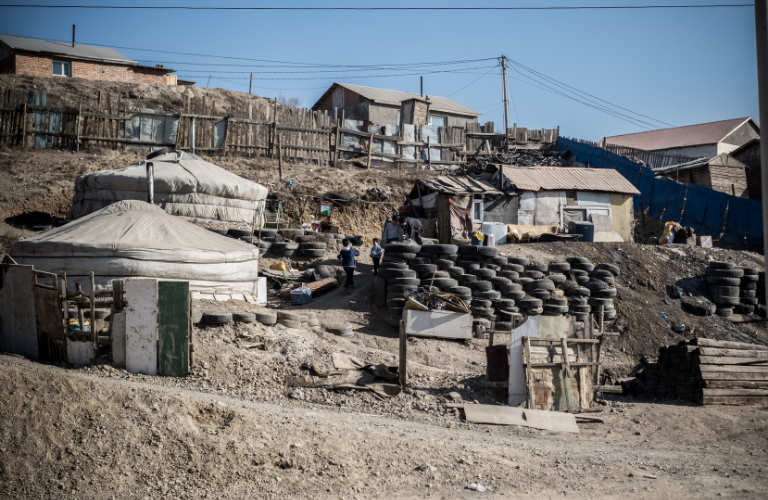
In four years, Geres team has implemented simple solutions to 1429 households and 274 of them was awarded by a 5cm roof insulations by spread the simple solutions to their neighbours.
These 5cm of roof insulation allow households to have up to 10% energy gain.
In total,
- 3556 tons of GHG emissions were avoided
- 1 546 households were insulated
- 2411 tons of fuel consumption were avoided
- 20 solutions were developed
- 73 MSMEs (micro small medium enterprises) were trained
A new phase of the project planned until 2026 in several Mongolian cities
Following the good results and the need to expand the project, a new phase is underway. But this time in the ger district one pilot in other province capital city.
The aim is to act on building the momentum for Sustainable Consumption and Production in the housing sector in Mongolia, scale-up inclusive, contextualized, affordable and financially viable Energy Efficiency (EE) solutions to decrease intensity, cost, GHG emissions of energy, and maximize health, economic and social benefits with an ultimate goal to promote just & sustainable development practices.
Our target: households, local authorities, construction material suppliers, financial institutions and international development agencies
And in detail it goes like this:
- 5900 households directly reached,
- 1000 households receive Green loan,
- 160 capacity building staff,
- 11 bank/BFI/saving groups collaborated,
- 5 developement of new products,
- 1 expand the activity into one other province
- 2 million people reached through the marketing and PR activities.
If you want to know more, discover our very synthetic infographic here
The project is supported by the SWITCH Asia grant programme of the European Union.

VOUS SOUHAITEZ AGIR EN FAVEUR DE LA SOLIDARITÉ
CLIMATIQUE ET SOUTENIR NOS ACTIONS ?
Dites-nous qui vous êtes et découvrez vos moyens d’action
CITOYEN·NE·S
Parce que la Solidarité climatique est l’affaire de toutes et tous, le Geres vous donne les clés pour passer à l’action.
ENTREPRISES
En tant que dirigeant·e d’entreprise, employé·e ou client·e responsable, vous avez le pouvoir d’agir au quotidien.
INSTITUTIONS & COLLECTIVITÉS
Soutenez nos actions en France et à l’international et devenez un acteur de la Solidarité climatique.
FONDATIONS
En vous engageant aux côtés du Geres, vous contribuez à la mise en œuvre d’actions innovantes et concrètes.
The post In Ulaanbaatar, our actions to fight against air pollution are extended until 2026 appeared first on Geres.
]]>Climate-compatibility and our projects: what’s it all about?
Geres takes the issues of climate change adaptation and mitigation into account when implementing projects. But what does that mean in practice? We take a look.
Adaptation means keeping humanity above the social floor, i.e. at an acceptable standard of living, given the consequences of climate change. Mitigation, on the other hand, aims to keep humanity below the ecological ceiling, a threshold above which our impacts on the climate would be irreversible. These concepts lie at the heart of Climate Solidarity, underpinning Geres strategy.
The climate-compatibility approach is designed to ensure that a project really does contribute to climate change adaptation and mitigation.
It comprises two studies:
- 1. Climate proofing. With a view to adapting project activities to climate uncertainties and making sure that they have positive impacts for the beneficiaries in the long term, the study looks at climate trends within the geographical context.
- 2. Impact carbone. In parallel, to ensure that projects make an effective contribution to the mitigation of future climate risks, the direct and indirect impact of project activities on the greenhouse gas emissions responsible for climate change is first analysed and then measured.
The aim of this approach is therefore to raise project teams’ awareness of the causes and consequences of climate change, identify climate issues affecting project activities and develop solutions in response.
Methodology of climate compatibility
- 1) The climate proofing protocol
The protocol helps the organization to understand how future climate trends (temperature, rainfall and extreme events) may impact the project and identify which components of the logical framework may suffer the effects of climate change, as well as how the biophysical and socio-economic effects can be determined and how possible solutions can be identified to adapt the project to environmental changes and risks in the long term.
It comprises five stages:
1. Analysing climate trends;
2. Identifying the areas of exposure related to the project’s activities;
3. Identifying the effects and impacts of the climate on the project’s areas of exposure;
4. Putting forward and designing solutions to improve the project in response to the biophysical and socio-economic effects identified;
5. Creating a monitoring framework for the measures.
Ideally, climate proofing is undertaken right at the start of the project, so that the solutions identified during stage 4 can be adopted.
2) The carbon impact study
This study helps to identify and measure the project’s effects on greenhouse gas emissions. The effects in question may be directly related either to activities carried out as part of the project or to indirect consequences (whether or not foreseen) of the project.
Accordingly, consideration will be given to both the additional greenhouse gas emissions generated by the project and its positive impacts in terms of avoided emissions or carbon permanently removed from the atmosphere.
This study is also conducted in five stages:
1. Examining the project context;
2. Analysing the direct and indirect effects of the project on greenhouse gas emissions;
3. Putting forward and designing solutions to reduce the negative impacts and optimize the positive impacts;
4. Creating a monitoring framework for the indicators serving to measure carbon;
5. Estimating the project’s potential (ex ante) or actual (ex post) quantitative carbon impact.
To find out more, feel free to contact our Geres Expertise team at contact@geres.eu
Geres news
A look back at nine years of collaboration with the Nexans Foundation
On the occasion of the tenth anniversary of the Nexans Foundation, Geres was invited to testify on the last nine years of ...
Laurence Tommasino : “In 2023, our challenge will be to step up our efforts to adapt our operating methods to different geopolitical contexts”
As we start the New Year, it's time to take stock. Laurence Tommasino, Geres executive director, tells us about the highlights for ...
Geres is opening an office in Burkina Faso: interview with Carole Dehu, Geres country representative
It's a first: Geres is moving into Burkina Faso. We find out what's happening from Carole Dehu, Geres country representative. ...
WOULD YOU LIKE TO TAKE ACTION
AND SUPPORT WHAT WE DO?
Tell us who you are and find your means of action.
CITIZENS
Because Climate Solidarity is a challenge we face collectively, Geres gives you the possibility to make a difference. TAKE ACTION AS A CITIZENPRIVATE SECTOR
As a business executive, an employee or a customer, you have the power to take action in your everyday life. TAKE ACTION AS A COMPANYLOCAL AND INSTITUTIONAL ACTORS
Support our actions in France and internationally and become an agent of change at our side. TAKE ACTION AS AN INSTITUTIONFOUNDATIONS
By supporting Geres, you contribute to the implementation of innovative and concrete actions. TAKE ACTION AS A FOUNDATIONThe post Climate-compatibility and our projects: what’s it all about? appeared first on Geres.
]]>Laurence Tommasino : “In 2023, our challenge will be to step up our efforts to adapt our operating methods to different geopolitical contexts”
As we start the New Year, it’s time to take stock. Laurence Tommasino, Geres executive director, tells us about the highlights for Geres in 2022, its sources of pride and its prospects, as well as the geopolitical state of play in some of the countries where we operate against a backdrop of political crises. Interview.
After two years marked by the pandemic, Geres is getting its breath back in 2022, with a return to something close to normality as regards field activities. Could you tell us some more about this?
L.T – Yes, with 2022 bringing an end to lockdowns and giving everyone the chance to travel again (in moderation!), we see a return to more face-to-face communication between colleagues and with our partners. That means more opportunities to get to grips with field realities, measure the effects of our work, think about future activities and share experience and practice, not to mention engage in pleasant social interaction.
What highlights have there been for Geres in 2022?
L.T – There were many, but two stand out in particular for me, because they show how commitment over a long timeframe and the involvement of all the stakeholders are the key to the success and sustainability of the services.
The creation of the IRA2E (Inter-Réseau Agriculture Energie Environnement) Association, which has been working for more than 15 years since the initial initiative was launched by Geres, offers a very good illustration. These days, the formalized association brings together a wide variety of partners from the agricultural world in the Provence-Alpes Côte d’Azur region, with each of them contributing their own skills.
In the same spirit, the formalization and start-up of the Malian social enterprise GBA (Green Biz Africa), which is taking on the task of managing the Green Business Zones, is the result of a long-term commitment on the part of the teams in Mali.
The relevance of the operation and the quality of its implementation, encompassing both social engineering and an economic and technical dimension, has spoken volumes, leading two recognized Malian investors to take stakes in the capital of GBA.
In both cases, there is huge satisfaction for me because the ability to pass the baton from Geres to stakeholders who will go on to develop the services is the best indicator of success. Patience, humility and inventiveness are required, but there is the reward, at the end of the day, of knowing that an organization like Geres has played its role to the full.
Amongst these highlights, do you have one or more reasons for pride to tell us about? And what could be improved?
L.T – Of course there were other sources of pride and once again the list is not exhaustive: I’m proud to see volunteers joining us and working with us on citizen mobilization! Proud of the expressions of gratitude and congratulations from our partners after the seminar on 24 November, which shone a spotlight on all the activities undertaken by Geres in France and internationally to combat household energy poverty.
- Proud that Geres has been getting together with other NGOs and associations to explore ways to reduce the carbon emissions of our organizations and talk about the climate-compatibility of the projects we are developing.
- And rather than just looking for improvement, I would say that tomorrow’s challenge is to step up our capacity to adapt to change.
In the field, we are facing more and more complex geopolitical and security situations obliging us to think about adapted methods of operation. International aid is evolving, becoming concentrated, with increasingly large-scale projects, and focusing more directly on local stakeholders.
The private sector (businesses, investment funds, foundations, etc.) is increasingly making its presence felt and, while it may not see development in the same way as institutional donors, its approach is complementary. Geres needs to adapt to all this, in liaison with local stakeholders and through forging strategic alliances.
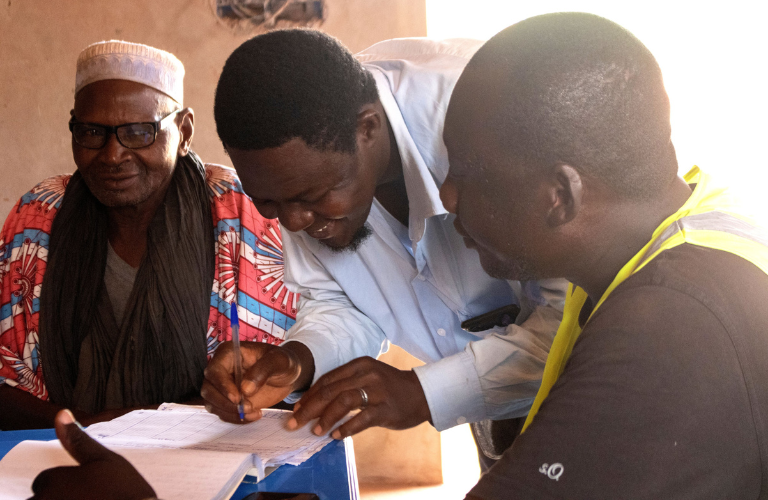
Amongst the major changes in 2022, Geres has fostered the emergence of a volunteer group, a completely new approach for the association. Why has this turn been taken? What are the next steps?
L.T – A first group of volunteers came together in our local area. This reflects a desire on their part to commit to the cause of Climate Solidarity and a wish on the part of Geres. For Geres, it means widening its voluntary sector base and being able to rely on these volunteers to promote Climate Solidarity. In 2023, in liaison with the mobilization officer, they will be facilitating more and more citizen mobilization activities.
Our thanks to Dalila, Pierre, Coralie, Magali, Camille, Elhaam and Célia, to everyone already taking our side. Their precious support breathes new life into Geres. And we are happily looking forward to welcoming more volunteers, setting up other groups and giving everyone the opportunity to take action for Climate Solidarity.
What are your ambitions for 2023 ?
L.T – What we are hoping to do in 2023 is:
- Engage in strategic thinking about our operating methods. How effective are we and on what conditions, how do we manage risks … depending on the context and our geographical focus.
- Adapt our operating strategies and start activities in new geographical areas.
- Move Geres governance forward, by seeking a larger number of members and looking into the establishment of local advisory boards to talk about current or future activities with the teams in the various countries where we work.
It is also clear that the political context in some of the countries where we work is presently difficult and has local effects on the colleagues involved. What is the state of play and what are the future prospects?
L.T – I would like first of all to salute again the commitment of the teams in three countries particularly hard hit by crisis since 2021. So it’s bravo and thank you to our Afghan, Malian and Burmese colleagues.
Nothing is easy when work has to be done under such conditions: difficulty in making as many field visits as required, strict security rules to be followed, complex, time-consuming administrative requirements, …
Prospects differ greatly from country to country. In Mali, despite the destabilizing effect of the sudden termination of an agreement with AFD, we are continuing to scale up the number of ZAEs with Swedish funding and in partnership with the GBA enterprise. In Myanmar (Burma), we are supporting several initiatives which we plan to continue if the European Union accepts the proposal, developed with Gret, for a large-scale programme we would like to get under way in 2024.
Finally, regarding Afghanistan, we decided a few days ago to close our office in the country, feeling that to continue while women are no longer allowed to work for either international or local NGOs would mean going against our values and our charter, making us complicit in an unspeakable discriminatory decision.
It is with great sadness that Geres had to resign itself to taking this difficult decision, because it means moving away from the country and the Afghan people at a time when they face a dreadful situation. Fortunately, Geres long experience and know-how in Afghanistan have not left the country because we began to transfer skills to our local partner several years ago. Moreover, retaining the link with this partner will enable us to work in the country once again when conditions allow.
Are you optimistic about the challenges before you?
L.T – If we all, employees, members and board of directors, stand together, if we engage with collectives such as Groupe Initiatives, Coordination SUD or Cler, we shall overcome the difficulties and advance our cause of Climate Solidarity. As mentioned above, the challenge will be to adapt the way our organization functions and operates in different contexts.
The fundraising campaign ended on 31 December last. Would you like to share your feelings about the generosity of the public at the end of 2022 in the light of the crisis situation?
L.T – A big thank you above all to all our donors! Apart from their financial significance, these donations are very strong signs of recognition for the whole team. The trust you show us is motivating and stimulating because it means we are going in the right direction.
The amount of donations is nevertheless lower this year than last. Of course that is a disappointment and means a loss of income. We do understand, because inflation also affects the ability to donate. Let us hope that the situation will be better at the end of 2023, that generosity will not be stifled and will keep its universal character, supporting people in France and internationally.
To conclude this interview, what are your hopes for 2023?
L.T – For Geres, that together we shall find the energy to face up to the constraints imposed on us by the halting of French funding in Mali. And, more widely, I reiterate my wishes for solidarity and shared prosperity and energy sobriety, as it seems to me that not everyone has yet understood or signed up because some people still can’t see the way forward!
L’actualité du Geres
A look back at nine years of collaboration with the Nexans Foundation
On the occasion of the tenth anniversary of the Nexans Foundation, Geres was invited to testify on the last nine years of ...
Laurence Tommasino : “In 2023, our challenge will be to step up our efforts to adapt our operating methods to different geopolitical contexts”
As we start the New Year, it's time to take stock. Laurence Tommasino, Geres executive director, tells us about the highlights for ...
Geres is opening an office in Burkina Faso: interview with Carole Dehu, Geres country representative
It's a first: Geres is moving into Burkina Faso. We find out what's happening from Carole Dehu, Geres country representative. ...
VOUS SOUHAITEZ AGIR EN FAVEUR DE LA SOLIDARITÉ
CLIMATIQUE ET SOUTENIR NOS ACTIONS ?
Dites-nous qui vous êtes et découvrez vos moyens d’action
CITOYEN·NE·S
Parce que la Solidarité climatique est l’affaire de toutes et tous, le Geres vous donne les clés pour passer à l’action.
ENTREPRISES
En tant que dirigeant·e d’entreprise, employé·e ou client·e responsable, vous avez le pouvoir d’agir au quotidien.
INSTITUTIONS & COLLECTIVITÉS
Soutenez nos actions en France et à l’international et devenez un acteur de la Solidarité climatique.
FONDATIONS
En vous engageant aux côtés du Geres, vous contribuez à la mise en œuvre d’actions innovantes et concrètes.
The post Laurence Tommasino : “In 2023, our challenge will be to step up our efforts to adapt our operating methods to different geopolitical contexts” appeared first on Geres.
]]>Geres is opening an office in Burkina Faso: interview with Carole Dehu, Geres country representative
It’s a first: Geres is moving into Burkina Faso. We find out what’s happening from Carole Dehu, Geres country representative. Interview.
Carole, you are the country representative for the new Geres office in Burkina. Could you please tell us in a few words how you reached that point?
C-D – I grew up in a farming, winegrowing environment in the beautiful region of Champagne. I went on to study industrial management and more specifically the organization and management of production. It was in that world I spent seven years working in France. Then an opportunity to change career presented itself and I grasped it, launching myself into the. humanitarian field, using logistics as my entry point.
After working for many years in the emergency sector, I gradually turned towards development. This year, I’m celebrating my “coming-of-age”, as I have clocked up 18 years working for NGOs abroad, in Africa, Asia and the Caribbean.
What was Geres objective in setting up in Burkina Faso?
C-D – Geres ran its first operations in Burkina Faso at the end of the 1980s, carrying out various projects there. More recently, technical assistance was provided to a major project, in the Boucle du Mouhoun region, including a Green Business Zone, where we were able to contribute our expertise. In parallel, the Wood Energy Sahel project was designed for three countries: Mali, Niger and Burkina Faso.
Geres is already established in Mali, but did not have a permanent presence in Burkina Faso, where the need for climate solidarity is keenly felt but so far unmet. Geres will run the Wood Energy Sahel project from Ouagadougou.
We are also aiming to develop new relevant projects in this landlocked region of the Sahel, where the degradation of some forests is gaining pace, particularly as a result of demographic pressure and poverty.
Can you tell us about the programme and why it has been rolled out in Burkina Faso?
C-D – The Wood Energy Sahel project has a four-year timeframe, drawing on €4 million funding from AFD and FFEM (French Global Environment Facility) for the three consortium partners: Hystra (Hybrid Strategies Consulting), the project lead; Entrepreneurs du Monde; and Geres. This project aims to make it easier for people in the major urban centres of Burkina Faso, Mali and Niger to access cooking energy.
The project will help to slow down the degradation of forests on the outskirts of Ouagadougou, Bamako and Niamey and build the capacity of private operators in the sector, as well as institutional structures at different levels, in line with national domestic energy strategies. Wood energy is the main fuel for more than 80% of households, because it is cheap and alternatives are often unavailable (electricity, gas, etc.).
This project arose largely due to the realization that the transition from wood energy to alternatives (LPG, agricultural residues, etc.) is currently too slow to stem the degradation of forest cover in the three countries, which is happening at one of the fastest rates in the world.
The project is innovative in that it takes account of household aspirations, product availability and financial accessibility. A larger proportion of the population will be made aware of the clean, efficient cooking options available in their home towns and be able more easily to obtain cooking appliances suited to their needs and financial capacity.
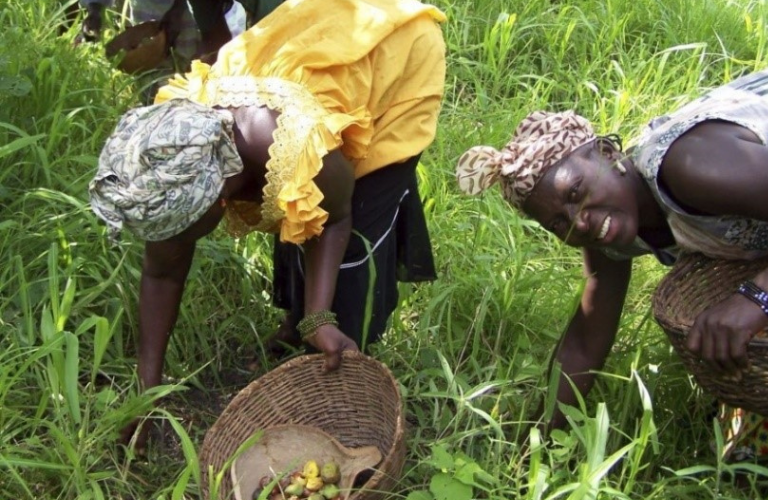
The project will also reduce the impact on the environment, the costs of cooking energy, the harmful effects of smoke on health and the safety risks involved in gathering wood.
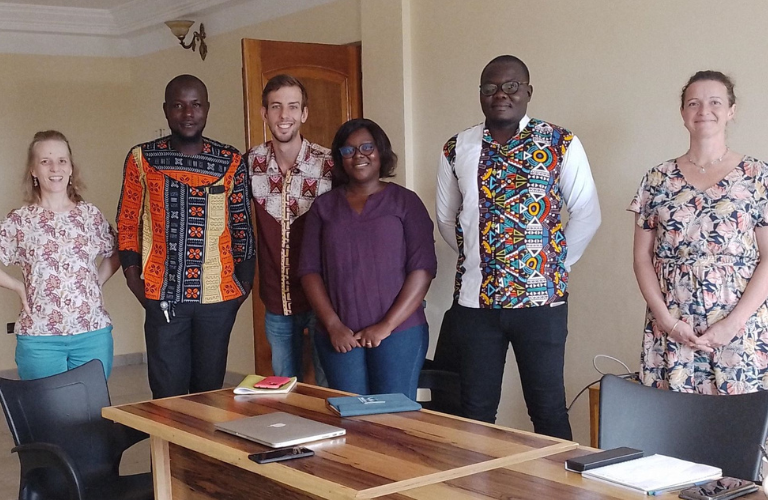
What is Geres role in this programme?
C-D – Through this project, we are working directly in the three countries: in Mali from our offices in Bamako and Ségou, and in Burkina Faso and Niger from our office in Ouagadougou.
Geres has overall responsibility for Pillar I, which consists of establishing a “Wood Energy in the Sahel platform” to produce knowledge and content for stakeholders on the Clean, Efficient Cooking (CEC) supply chain in the region. Geres will mobilize technical assistance to meet the project-related needs of key players in the sector.
In addition, Geres will implement a public awareness strategy to encourage the dissemination of CEC equipment. Finally, Geres has a cross-cutting role in the project as regards monitoring and evaluation, gender and institutional communication.
How do you see this office in five years time (development of the teams, number of employees, partnerships and so on)?
C-D – The Burkina Faso office, which has only just started up, seeks to develop local partnerships to put its projects on a firmer and more sustainable footing, focusing on the five key areas of Geres expertise, but more specifically on energy access, controlling energy demand and rolling out renewable energies. Geres operational team, to which a project manager has recently been added, will then be better equipped to move towards geographical and thematic expansion and maximize its activities.
Next key stages in the programme?
C-D – Geres will now be able to contribute more effectively to data collection and market research, as well as identify and bring together the various players in the Clean, Efficient Cooking sector, not only manufacturers and distributors but also national authorities or alliances.
L’actualité du Geres
A look back at nine years of collaboration with the Nexans Foundation
On the occasion of the tenth anniversary of the Nexans Foundation, Geres was invited to testify on the last nine years of ...
Laurence Tommasino : “In 2023, our challenge will be to step up our efforts to adapt our operating methods to different geopolitical contexts”
As we start the New Year, it's time to take stock. Laurence Tommasino, Geres executive director, tells us about the highlights for ...
Geres is opening an office in Burkina Faso: interview with Carole Dehu, Geres country representative
It's a first: Geres is moving into Burkina Faso. We find out what's happening from Carole Dehu, Geres country representative. ...
VOUS SOUHAITEZ AGIR EN FAVEUR DE LA SOLIDARITÉ
CLIMATIQUE ET SOUTENIR NOS ACTIONS ?
Dites-nous qui vous êtes et découvrez vos moyens d’action
CITOYEN·NE·S
Parce que la Solidarité climatique est l’affaire de toutes et tous, le Geres vous donne les clés pour passer à l’action.
ENTREPRISES
En tant que dirigeant·e d’entreprise, employé·e ou client·e responsable, vous avez le pouvoir d’agir au quotidien.
INSTITUTIONS & COLLECTIVITÉS
Soutenez nos actions en France et à l’international et devenez un acteur de la Solidarité climatique.
FONDATIONS
En vous engageant aux côtés du Geres, vous contribuez à la mise en œuvre d’actions innovantes et concrètes.
The post Geres is opening an office in Burkina Faso: interview with Carole Dehu, Geres country representative appeared first on Geres.
]]>Geres signs a partnership agreement with Erilia and CEPAC
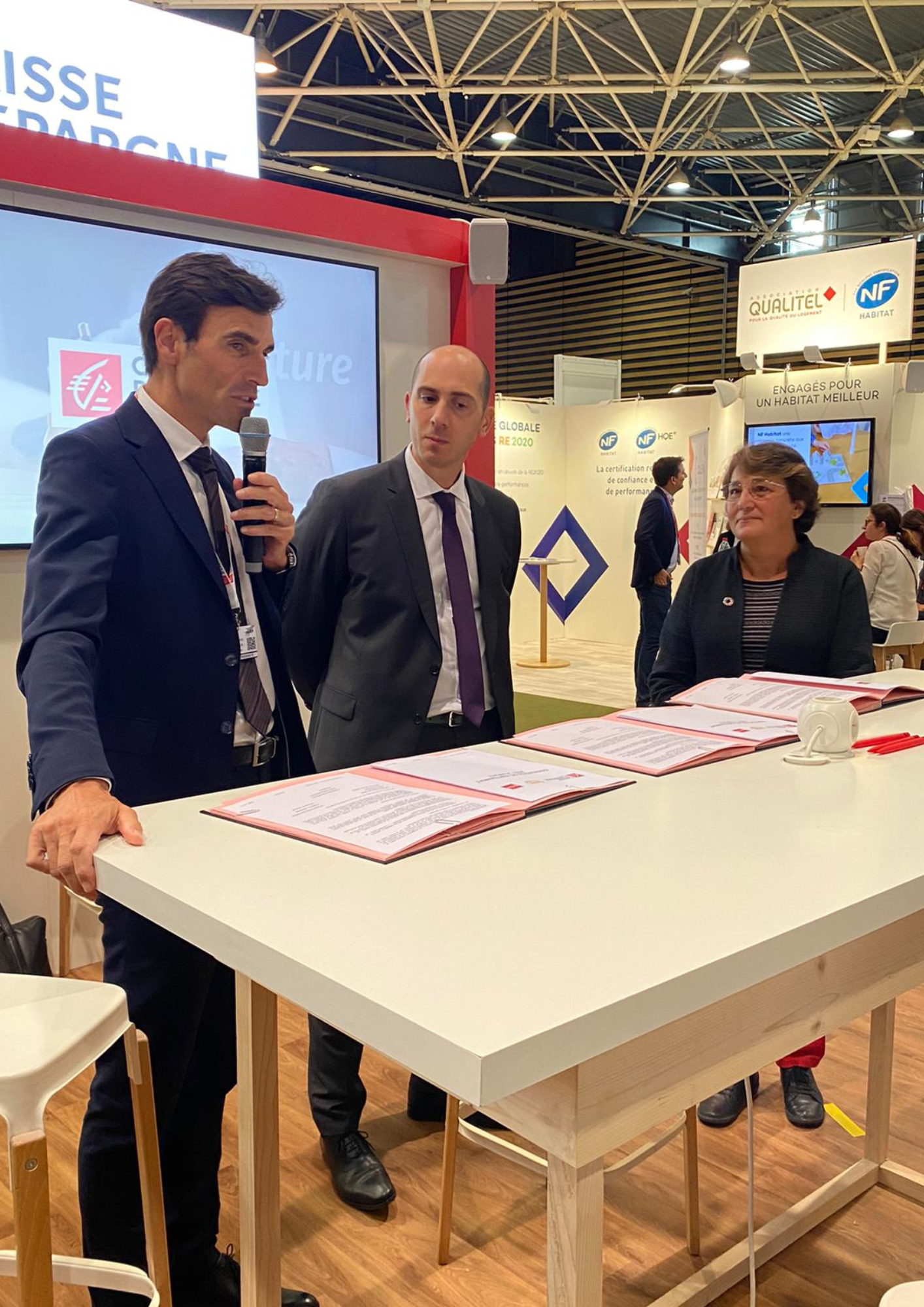
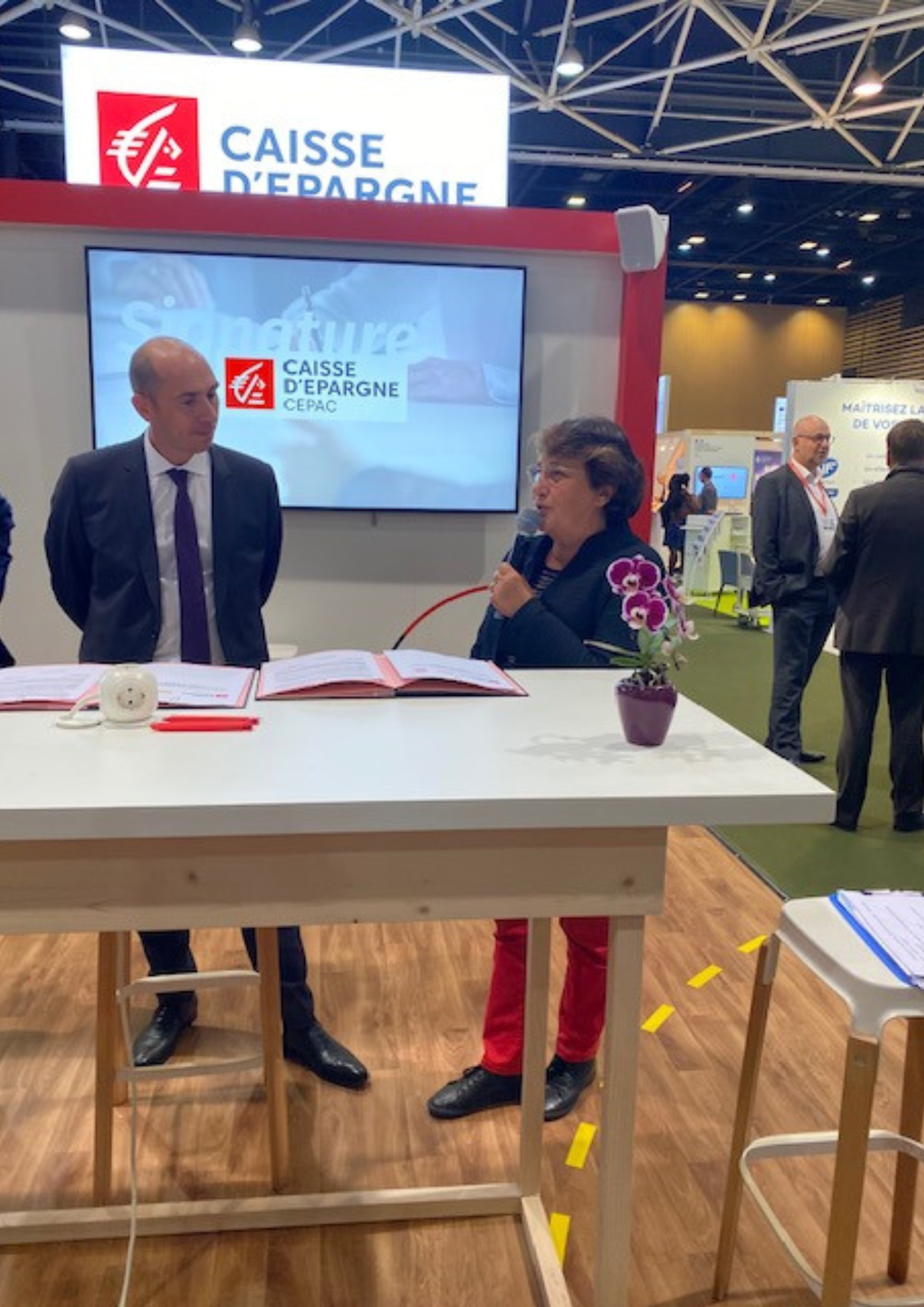
Erilia, a french builder of social housing, has decided to grant Geres the funds from the subsidy of its impact loan contracted with CEPAC. On the occasion of the 82nd National Congress of the HLM which was held in Lyon last week, the three partners formalized this partnership which extends over 30 years. A look back at this innovative and committed alliance.
CONTEXT
In September 2021, Erilia took out a €30 million environmental impact loan with CEPAC (Caisse d’Epargne). This loan allows the interest rate to be indexed to environmental criteria. For Erilia, the indicator used is the % annual reduction in the number of housing units classified as D, E, F and G (F and G being considered as “thermal flats”).
If the objective is reached or exceeded (reduction of 2 to 8% per year of housing with D, E, F and G labels), Erilia will benefit from an interest rate subsidy which will be paid in full to Geres; this represents a payment of €416,000 over a 30-year period.
SHARED CONVICTIONS
The association chose Geres, whose cause of climate solidarity is in line with the commitments of Erilia, the first social housing company to adopt the status of a company with a mission, and with the values of the Caisse d’Epargne CEPAC, a local player in the energy transition and social inclusion.
“We are delighted to sign this agreement, which is a lasting contribution to Geres’ actions in France and abroad, particularly in the fight against fuel poverty. This partnership is driven by our common desire to act both for the climate and to improve the living conditions of the poorest people. We are grateful to be associated with the innovative impact loan and mission-based enterprise approaches promoted by Erilia and the Caisse d’Epargne CEPAC,” explains Marie-Noëlle Reboulet, President of Geres.
“I am particularly pleased that the subsidy for Erilia’s first impact loan has been awarded to Geres. It is an association that has been committed to the energy transition for many years, a subject that is particularly important for Erilia as a social landlord. We share the same values of social responsibility and support for the most vulnerable. Participating in field actions by becoming a patron of Geres makes full sense in our capacity as a company with a mission” explains Frédéric Lavergne, Erilia’s Managing Director.
the partnership
The tripartite agreement signed today aims to :
- establish the conditions for granting the bonus to the association, for a total amount of €416,000
- ratify the status of patron of Erilia and the Caisse d’Epargne CEPAC in favor of Geres
- to integrate Erilia and the Caisse d’Epargne CEPAC in the “Community for Climate Solidarity” formed by Geres
- to enable participation, co-animation and construction of workshops on the themes of climate and development
- organize an annual meeting to share the challenges of the ecological transition, debate and enrich business practices and raise awareness of the challenge of reducing greenhouse gases.
A donation that is part of the deployment of Geres’ actions, which for the first time receives a contribution from a loan with environmental impact.
L’actualité du Geres
A look back at nine years of collaboration with the Nexans Foundation
On the occasion of the tenth anniversary of the Nexans Foundation, Geres was invited to testify on the last nine years of ...
Laurence Tommasino : “In 2023, our challenge will be to step up our efforts to adapt our operating methods to different geopolitical contexts”
As we start the New Year, it's time to take stock. Laurence Tommasino, Geres executive director, tells us about the highlights for ...
Geres is opening an office in Burkina Faso: interview with Carole Dehu, Geres country representative
It's a first: Geres is moving into Burkina Faso. We find out what's happening from Carole Dehu, Geres country representative. ...
VOUS SOUHAITEZ AGIR EN FAVEUR DE LA SOLIDARITÉ
CLIMATIQUE ET SOUTENIR NOS ACTIONS ?
Dites-nous qui vous êtes et découvrez vos moyens d’action
CITOYEN·NE·S
Parce que la Solidarité climatique est l’affaire de toutes et tous, le Geres vous donne les clés pour passer à l’action.
ENTREPRISES
En tant que dirigeant·e d’entreprise, employé·e ou client·e responsable, vous avez le pouvoir d’agir au quotidien.
INSTITUTIONS & COLLECTIVITÉS
Soutenez nos actions en France et à l’international et devenez un acteur de la Solidarité climatique.
FONDATIONS
En vous engageant aux côtés du Geres, vous contribuez à la mise en œuvre d’actions innovantes et concrètes.
The post Geres signs a partnership agreement with Erilia and CEPAC appeared first on Geres.
]]>Fulgence Akaffou: “We have already trained 30 groups of women processors to use improved cooking stoves”
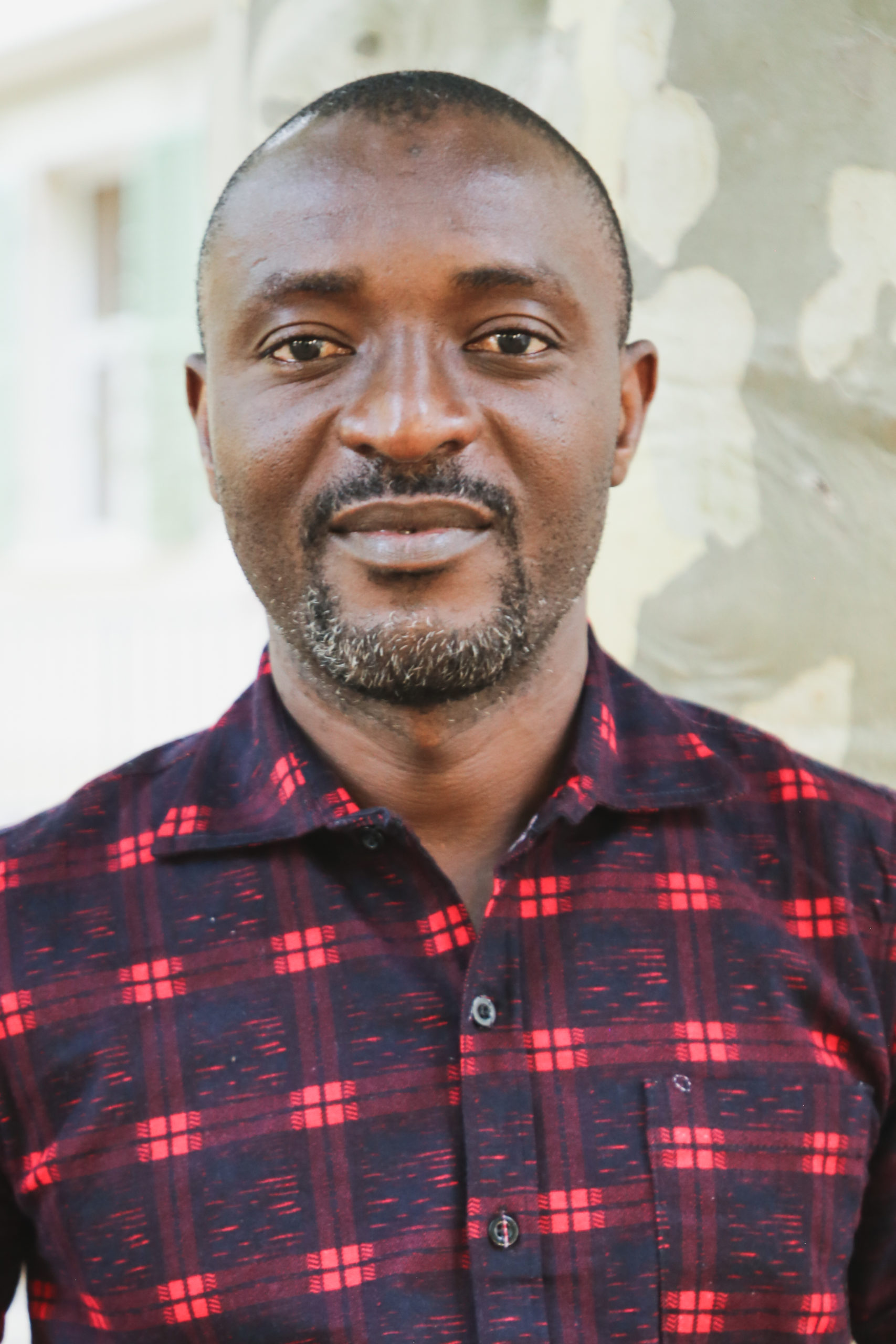
In this interview, Fulgence Akaffou, biomass manager at Geres, answers our questions on the importance of rethinking cassava cooking in Benin, especially for women who are often responsible for harvesting firewood for food processing and cooking. A climatic and health issue.
Fulgence Akaffou
is an engineer, responsible for carbon finance and biomass projects at Geres.
What led you to work on cassava cooking/processing in Benin?
F.A : — In Benin, about 70% of women live in rural areas, where they do a great deal of agricultural work and provide food for their families. Women are responsible for harvesting firewood for food processing and cooking.
The cassava sector, with processing into gari or other by-products, concerns 4 out of 5 rural women, particularly in the Collines department in the center of the country.
What are the issues of this transformation?
F.A : — The transformation of cassava semolina into gari is a very energy-intensive roasting process that lasts from 8 to 11 hours. With the use of open fireplaces (known as “3 stones”), for every 100 kg of gari transformed, the women transformers consume on average 200 kg of firewood. In addition to this, there is the hardship and health risks for them and their young children, with heavy pollution of the domestic air due to the fumes and frequent burns.
Read : Job creation and forest preservation, explaining Benin issues
Who did you work with ?
F.A : — Two intermunicipal actors of the territory are involved :
- The GIC, Groupement Intercommunal des Collines, brings together the 6 municipalities and works to define and implement the policies of this department.
- The CoForMO, Forest Community of Moyen-Ouémé state, brings together 9 communes (including those of the GIC) for the sustainable management of the forest resources of the protected domain of Moyen-Ouémé.
what solutions are you implementing and what are the main results ?
F.A : — An improved productive stove “ALAFIA”, energy efficient and adapted to gari cooking, was developed and disseminated by the CEMAATERR project, a project aiming at reducing the carbon footprint and improving resilience to climate change in rural territories of the country, with demonstrations and tests in situ.
Here, for example, potters and women processors were involved in finding the most appropriate solution, which allowed them to explore energy efficiency, smoke control, but also raw material supply
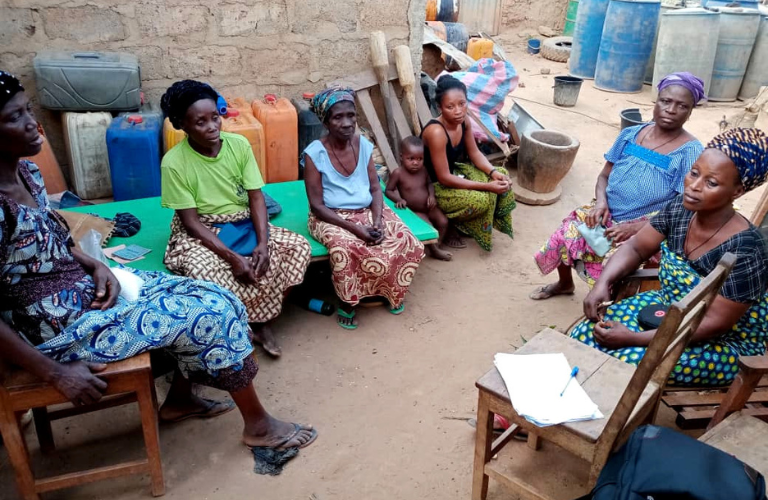
30 groups of women processors have benefited from in situ training and close follow-up on this clay and metal cage hearth: use, manufacture and maintenance, in particular the production of earth aggregate to be autonomous in its maintenance and to realize it without cost.
To date, 90 collective stoves for the transformation of cassava into gari have been distributed to 30 women’s groups.
After use, the feedback is positive.
Today, there has been a significant reduction in the use of wood and an improvement in energy efficiency of about 50%. We also note an improvement in the women’s net economic income, thanks to the increase in production yields and the reduction in the amount of firewood used. Finally, the approach shows us that the working conditions and health of women processors are much better. This is linked to the quality and speed of cooking and the reduction of domestic air pollution.
The main challenge today, in view of the good results obtained by the CEMAATERR program, is to mobilize funding to continue and expand this action that meets immense social, economic and environmental needs.
VOUS SOUHAITEZ AGIR EN FAVEUR DE LA SOLIDARITÉ
CLIMATIQUE ET SOUTENIR NOS ACTIONS ?
Dites-nous qui vous êtes et découvrez vos moyens d’action
CITOYEN·NE·S
Parce que la Solidarité climatique est l’affaire de toutes et tous, le Geres vous donne les clés pour passer à l’action.
ENTREPRISES
En tant que dirigeant·e d’entreprise, employé·e ou client·e responsable, vous avez le pouvoir d’agir au quotidien.
INSTITUTIONS & COLLECTIVITÉS
Soutenez nos actions en France et à l’international et devenez un acteur de la Solidarité climatique.
FONDATIONS
En vous engageant aux côtés du Geres, vous contribuez à la mise en œuvre d’actions innovantes et concrètes.
The post Fulgence Akaffou: “We have already trained 30 groups of women processors to use improved cooking stoves” appeared first on Geres.
]]>Case study : in Cambodia, a sustainable charcoal value chain to combat deforestation
Heading to the Cardamom Massif. In 2016, Geres proposed a new business model with the “KjuonGo” concept: a sustainable, legal and traceable alternative value chain for charcoal. This model is based on connecting actors, optimizing logistics and traceability through a specific mobile application. At the end of 2022, the project will be completed: we take stock.
Case study presented in preview and realized for the Climate Chance Report
Cambodia is still heavily dependent on wood and charcoal for its energy needs (domestic cooking, catering, industrial heating and so on) and half the charcoal consumed in Phnom Penh comes from the Cardamoms mountain range. This primary forest hosts one of the last fauna and flora sanctuaries in the Mekong countries, but deforestation is threatening biodiversity and the landscape while exacerbating the climate risks and conflicts over land ownership or use.
Geres work targets the buffer zones of the Phnom Oral protected area, which offer essential natural protection against forest degradation and climate uncertainties but are seeing their integrity increasingly under threat from pressure on forest resources.
Learn more about the challenges of sustainable energy in Cambodia
Traditional charcoal production is often undertaken by migrants living along the illegal deforestation line. Combating this activity is difficult; the Forest Administration (AF) intervenes and destroys their kilns, but they move elsewhere and start again even though the work earns them very little.
KjuonGo, the challenge of launching a legal, sustainable, profitable value chain
Context. Geres has been working in Cambodia since 1994. Between 2003 and 2013, more than 3 million improved domestic stoves were produced and distributed with support from carbon finance. As of 2008, efforts began to improve traditional carbonization techniques and encourage sustainable forest management by the forest communities (FCs). In 2012, the Khmer Green Charcoal (KGC) initiative, dedicated to briquette production, became an independent social enterprise.
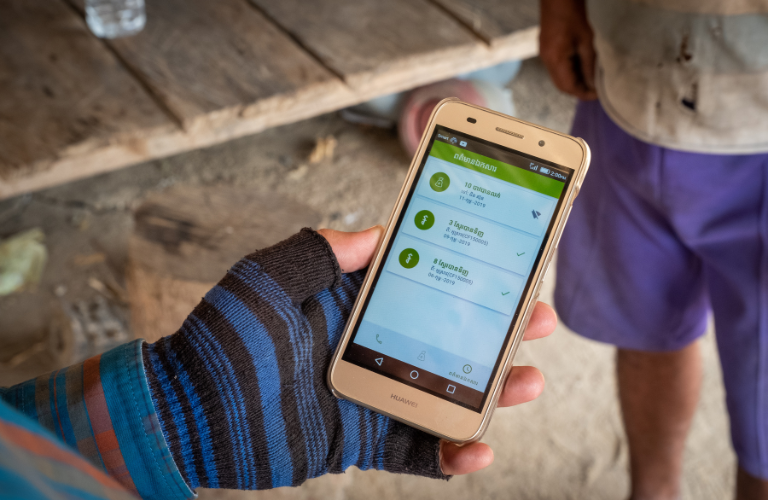
Since 2016, with support from the UNDP, Geres has promoted a new commercial model with the KjuonGo concept of an alternative sustainable, legal, traceable charcoal value chain. This model relies on stakeholder networking, optimization of logistics and traceability by means of a specific mobile app.
The charcoal producers connected with the FCs buy the sustainably harvested wood within the limit of the quotas authorized by the AF. The technical support provided has helped to improve production and the sustainable charcoal is distributed to customers under the KjuonGo brand.
From 2019 until 2022, the KjuonGo project has been part of the CEMAATERR[1] programme. KjuonGo involves the Pursat and Kampong Chhang provinces and is organized around two components: the community sustainable charcoal value chain and community plantations. It receives support from the French Development Agency, the Nordic Development Fund and the Maisons du Monde foundation.
Geres focuses on structuring the value chain by helping forest communities and charcoal producers with the technical and organizational aspects, as well as the local AF with legal charcoal production techniques. Commercial activities are handled by the KGC enterprise: ordering wood from the FCs, selling sustainable charcoal, monitoring of quality through to the final consumers, liaison with the national AF concerning the administrative procedures for legalization. Finally, KGC organizes the advertising campaigns while Geres educates textile factories about the use of sustainable biomass.
Community plantations make up the second project component, which is supporting community initiatives to reforest with native species and testing three alternative models: acacia planted on communal land, fruit trees planted on private land and commercial acacia plantations for firewood and products with greater added value.
[1] This article draws in particular on the evaluation report produced by ACK International for AFD and Geres : CEMAATERR Programme –”Climate – Energy: Adaptation and Mitigation in Rural Territories” – Final evaluation of Phase II – Country Component Note: Cambodia – 2022
Kjuongo: social, economic and environmental impacts
Over these three years, significant quantitative results have been obtained:
- 12 FCs and charcoal producers involved, observance of the quotas of 100% legal charcoal, 12 more efficient charcoal kilns built or renovated by the producers, a marketable product for KGC;
- 17 ha reforested, 13,000 seedlings produced in the nurseries, close to 9000 trees planted and 7400 ha of forest sustainably managed or protected by the communities, 7.5% of income generated by the FCs reinvested, primarily to finance patrols;
- Participatory production of maps (plantations, degraded areas, etc.) and action plans drawn up by the communities to protect and restore their forests.
Some initial positive impacts can be highlighted: social impacts with women’s involvement and acknowledgement of the status of charcoal producers, environmental impacts with reduced smoke emissions during carbonization, around 588 tonnes CO2 equivalent avoided (plus an estimated 4,800tCO2eq deforestation avoided) and a commercial community plantation model established, economic impacts with job creation (163 jobs created, mostly part-time, of which 54 for women), income generated, a viable activity for KGC.
The slowness of the Forest Administration in legalizing these activities and the fall in demand due to Covid19 health restrictions have, however, had a significant impact on the quantities of charcoal produced in three years: 74 tonnes of KjuonGo charcoal sold as against the projected 300.
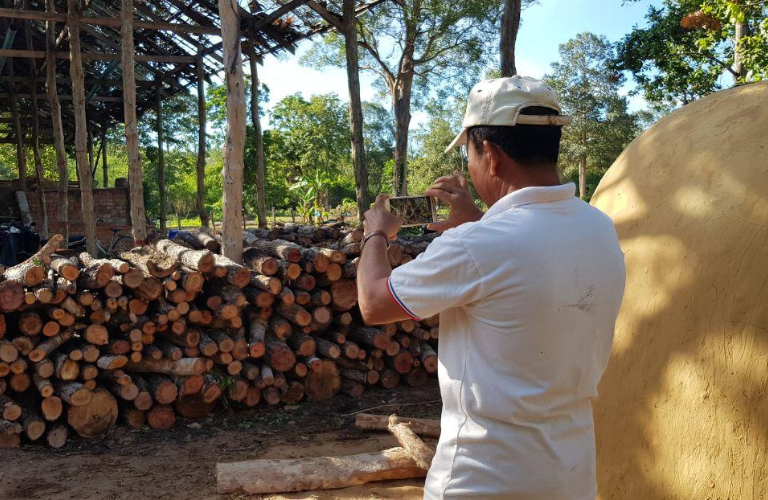
The case of the charcoal producers is particularly interesting: legal activity improves their income as well as their social status. They had a very poor image: illegals engaged in hazardous work, comparable to poor people. KjuonGo has made it possible to register them officially. With a licence and status they can work by day, without having to hide, in safer conditions and with the prospect of technical advancement.
Promising results but serious challenges in scaling up
In 2022, the Geres project is coming to an end. It has enabled KGC and the communities to join forces to deliver charcoal with both environmental and social impacts. The barriers and levers for moving from this pilot phase to larger scale action have been identified. Even though the first criterion is still price, the social benefit is significant for both urban consumers and institutions. Sustainable charcoal purchase agreements have already been concluded between KGC and four charcoal producers and KGC is seeking finance from private investors.
Similarly, a partnership has been built up between KGC and the Forest Administration at national level. But will the latter go so far as to provide support through public funding, with the involvement of new FCs?
Furthermore, energy management is a topical subject in textile factories and 50 of them have committed to an energy diagnosis including biomass (Switch Garment project with Geres). The greater demands made by international brands as regards the fuels used by their suppliers offer outlets for wood produced in a legal, sustainable manner.
The ambition of the Geres project was to work on several innovations in terms of product, value chain, framework for dialogue and consultation and approach, combining the territorial and value chain approaches. Let us hope that its achievements will be enough to resist competition from the informal, unregulated charcoal production sector, which accepts no sustainability constraints on wood supply.
VOUS SOUHAITEZ AGIR EN FAVEUR DE LA SOLIDARITÉ
CLIMATIQUE ET SOUTENIR NOS ACTIONS ?
Dites-nous qui vous êtes et découvrez vos moyens d’action
CITOYEN·NE·S
Parce que la Solidarité climatique est l’affaire de toutes et tous, le Geres vous donne les clés pour passer à l’action.
ENTREPRISES
En tant que dirigeant·e d’entreprise, employé·e ou client·e responsable, vous avez le pouvoir d’agir au quotidien.
INSTITUTIONS & COLLECTIVITÉS
Soutenez nos actions en France et à l’international et devenez un acteur de la Solidarité climatique.
FONDATIONS
En vous engageant aux côtés du Geres, vous contribuez à la mise en œuvre d’actions innovantes et concrètes.
The post Case study : in Cambodia, a sustainable charcoal value chain to combat deforestation appeared first on Geres.
]]>