Improving the energy efficiency of school buildings in Midelt Province
The project to improve the energy efficiency of school buildings in Midelt province comes under the CEMAATERR programme, which aims to help reduce the carbon footprint and boost climate resilience in the rural territories and relay towns of Asia, West Africa and the Mediterranean.
Background and issues
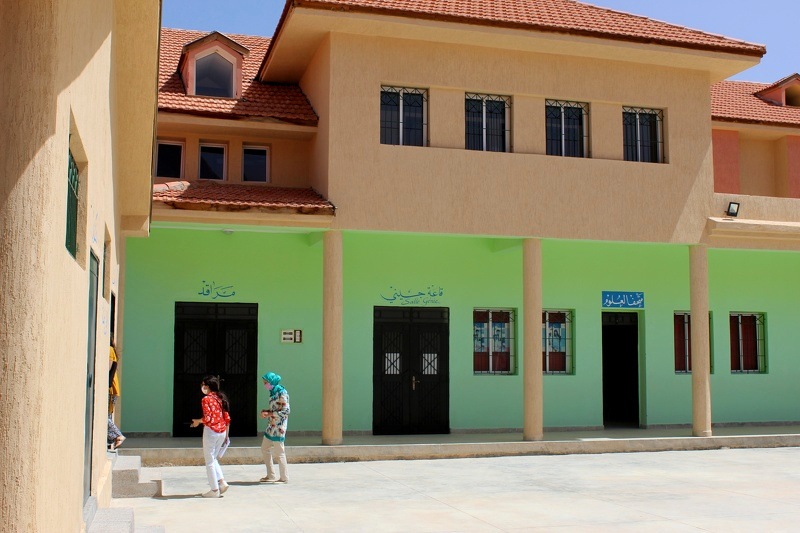
Midelt is a mainly rural province located at an altitude of more than 1500 m in the Middle Atlas mountain range in Morocco, where winters are harsh and snowfalls frequent despite the Mediterranean climate. Buildings are very often not designed to ensure thermal comfort.
A study conducted by Geres in 2018 on heating and thermal comfort conditions in schools in the province revealed the need for work on the energy efficiency of these public educational buildings (thermal insulation, bioclimatic techniques, etc.) to improve pupils’ learning environment.
4°C is the lowest temperature recorded on winter mornings in the classrooms of schools in Midelt
The state of these schools is a drain on the budgets of the institutions as well as the parents, who sometimes offer some of their meagre resources to help purchase fuel to heat these thermal sieves.
Geres has been working in Morocco since the 1980s on projects relating to sustainable biomass energy management and, more widely, on energy demand management, supporting communities, businesses and territories in their energy transition. Another component will therefore now be added to Geres programme in Morocco, focusing on the problems of energy efficiency in buildings in mountain areas.
Objectives and proposed solutions
To help reduce the carbon footprint and boost the climate resilience of Midelt province, the CEMAATERR project focuses on two complementary areas:
- Raising the awareness of territorial stakeholders (public authorities, associations, citizens, etc.), building local institutions’ territorial energy and climate planning capacity and helping building sector professionals to develop energy efficiency solutions.
- Pilot initiatives in schools (construction and/or renovation), demonstrating the feasibility and relevance of boosting energy efficiency in public buildings to improve living conditions for pupils and staff and generate savings for the institutions as well as economic opportunities, while reducing greenhouse gas emissions.
Beneficiaries
- 150 schoolchildren and teaching staff enjoy greater thermal comfort
- 30 elected representatives and institutions’ technical staff, along with seven local associations, have enhanced capacity to tackle energy and climate issues
- 600 schoolchildren, teachers and parents are more aware of energy and climate issues
- 5 SMEs, artisans and/or entrepreneurs receive support in structuring a package of sustainable energy services
Technical and financial partners
- French Development Agency
- Engie Foundation
- Eurofins Foundation
- Provincial Education Department
- Midelt Provincial Council
- Rabat National School of Architecture
- Jbel Ayachi Association for cultural, social, economic and environmental development
- ALTO ingénierie
MAIN PARTNER

DOCUMENT TO DOWNLOAD
VOUS SOUHAITEZ AGIR EN FAVEUR DE LA SOLIDARITÉ
CLIMATIQUE ET SOUTENIR NOS ACTIONS ?
Dites-nous qui vous êtes et découvrez vos moyens d’action
CITOYEN·NE·S
Parce que la Solidarité climatique est l’affaire de toutes et tous, le Geres vous donne les clés pour passer à l’action.
ENTREPRISES
En tant que dirigeant·e d’entreprise, employé·e ou client·e responsable, vous avez le pouvoir d’agir au quotidien.
INSTITUTIONS & COLLECTIVITÉS
Soutenez nos actions en France et à l’international et devenez un acteur de la Solidarité climatique.
FONDATIONS
En vous engageant aux côtés du Geres, vous contribuez à la mise en œuvre d’actions innovantes et concrètes.
The post Improving the energy efficiency of school buildings in Midelt Province appeared first on Geres.
]]>Chefchaouen, towards a model sustainable city
From 2015 to 2018, Geres accompanied the city of Chefchaoueun in Morocco in its energy transition.
Context and challenges
A small, picturesque mountain city in an exceptional setting, Chefchaouen earns its living primarily from tourism. The main challenges it presently faces are:
- Improving the quality of life of citizens and tourists by enhancing the built environment, encouraging the use of alternative, nonpolluting means of transport and providing better public lighting
- Developing economic activities to reduce unemployment, especially of young people and women, and anticipate the upward trend in energy prices
- Preserving its environment and making better use of its natural resources: closing the open landfill site, combating deforestation and the pollution of water courses
- Meeting the vital needs of people living in the new informal settlements springing up around the city
- Anticipating the very heavy impact of climate change in the region

Objectives and solutions
- Know, control and reduce the energy consumption of the municipality, citizens and professionals through awarenessraising, advice and putting tools in place to monitor and analyse consumption in buildings, transport and public lighting
- Enhance local technical skills in sustainable energy management through training public officials, councillors and professionals in the building, tourism and trade sectors and networking stakeholders at local, national and international level (partnership with the PACA region of France)
- Develop a participatory approach to environmental policy formulation by setting up a Participatory Energy, Climate and Environment Council to include together representatives of all population groups (economic sectors, associations, etc.)
- Share this approach with other areas: capitalization of good practice and skills transfer via the Moroccan EcoCity Association (AMEV); sharing with other Moroccan local authorities
Partners
Financial partners
- European Union
- Provence-Alpes-Côte d’Azur Region
- AFD, French Development Agency
- Nexans Foundation
Technical partners
- AMEV, Moroccan EcoCity Association
- IDEE, Development, Environment and Energy Institute
- CUC, Chefchaouen Urban Municipality
WOULD YOU LIKE TO TAKE ACTION
AND SUPPORT WHAT WE DO?
Tell us who you are and find your means of action.
CITIZENS
Because Climate Solidarity is a challenge we face collectively, Geres gives you the possibility to make a difference. TAKE ACTION AS A CITIZENPRIVATE SECTOR
As a business executive, an employee or a customer, you have the power to take action in your everyday life. TAKE ACTION AS A COMPANYLOCAL AND INSTITUTIONAL ACTORS
Support our actions in France and internationally and become an agent of change at our side. TAKE ACTION AS AN INSTITUTIONFOUNDATIONS
By supporting Geres, you contribute to the implementation of innovative and concrete actions. TAKE ACTION AS A FOUNDATIONThe post Chefchaouen, towards a model sustainable city appeared first on Geres.
]]>Sustainable hamams in Morocco: an essential service facing an environmental challenge
This project, carried out from 2014 to 2018, aimed to reconcile ecology, profitability and tradition in Moroccan hammams through the energy modernization of the establishments.
Context and challenges
As a key part of social life, hamams are regularly visited by 95% of the Moroccan population, including many families who have no toilet facilities to attend to their daytoday hygiene needs. Hamams are a favourite meeting place and a public social space for women too. The sector employs around 200,000 people.
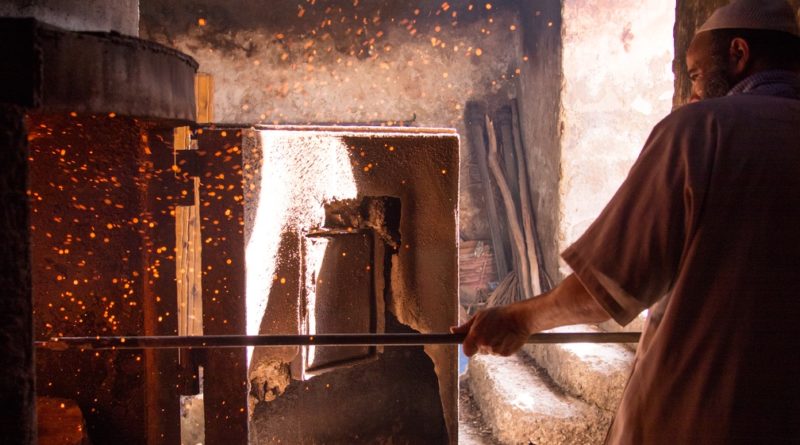
The generally energyintensive infrastructure, the hamams’ mostly obsolete boiler rooms and a number of poor practices cause significant pollution and overconsumption of wood and water.
Against a background of climate change and pressure on forests, the growing scarcity and increased cost of these resources threatens the continued existence of hamams. Obliged to raise the price of access considerably, they sometimes end up having to close down.
In addition, the harmful smoke given off by hamams has negative impacts on the health of local people and workers. The stokers (fernatchis), who live and work in the technical area of the hamam, are the first to suffer, seeing their life expectantly reduced by indoor air pollution.
With a view to guaranteeing the continued existence of this traditional institution and the basic services it provides to local people, Geres and its local partner associations and institutions are working to help hammam owners bring about energy modernization of the sector.
Objectives and solutions
Reduce the wood and water consumption of hamams; the harmful smoke affecting workers and local people; and greenhouse gas emissions.
Guarantee the sustainability of hamams and their affordability for the population.
To this end, the project proposes:
- Energy modernization and technical monitoring of 10 hamams
- Energy renovation advice for 40 additional hamams
- Support for the emergence of local service and technology provision in the private sector to meet the need for modernization of hamams.
- The project’s fields of operation are the supply and processing of fuel and the production, distribution and management of hot water and heat.
Partners
Technical partners
- EnSEn – moroccan NGO (Energy, Solidarity and Environment)
- Moroccan National Federation of Owners/Operators of Traditional Baths
- Urban municipalities
Financial partners
- FFEM – the French Global Environment Facility
- GEF Small Grants Programme
- Itancia Endowment fund
Watch the project video
WOULD YOU LIKE TO TAKE ACTION
AND SUPPORT WHAT WE DO?
Tell us who you are and find your means of action.
CITIZENS
Because Climate Solidarity is a challenge we face collectively, Geres gives you the possibility to make a difference. TAKE ACTION AS A CITIZENPRIVATE SECTOR
As a business executive, an employee or a customer, you have the power to take action in your everyday life. TAKE ACTION AS A COMPANYLOCAL AND INSTITUTIONAL ACTORS
Support our actions in France and internationally and become an agent of change at our side. TAKE ACTION AS AN INSTITUTIONFOUNDATIONS
By supporting Geres, you contribute to the implementation of innovative and concrete actions. TAKE ACTION AS A FOUNDATIONThe post Sustainable hamams in Morocco: an essential service facing an environmental challenge appeared first on Geres.
]]>Supporting small informal bakeries in Morocco
Support and training for small-scale bakers engaged in a traditional activity which still maintains a foothold in urban areas and can provide jobs for vulnerable people.
Context and challenges
According to a Geres study conducted in 2018 among 450 small informal bakeries in Morocco, 60% of them are vulnerable.
In addition to low investment capacity, they lack management skills and jobs are precarious. They are mainly small production entities, sometimes family-based, ranging from simple income-generating activities to VSEs, which nevertheless provide jobs for low-skilled people and are a lever for empowerment and inclusion for young people and women.
In terms of natural resources, small bakeries consume an average of one bottle of gas per day. Despite the subsidies on gas, energy costs are high and are likely to increase in the prospect of a decrease in state aid.
At the basis of Moroccan food, with an estimated production of 195 million units per day, bread carries important socio-economic stakes, in connection with the country’s political stability and food security.

Objectives and solutions
With a view to structuring this sector and boosting its economic development, whilst diminishing its environmental impact, the FaranEco project operates on several complementary levels:
- Building the technical and managerial capacities of stakeholders in the sector
- Making an efficient production tool available, by supporting the design, dissemination and financing of highly energy-efficient ovens. More economical and safer, these ovens will result in improved working conditions and significant energy and financial savings in the long run
- Establishing the preconditions for structuring a favourable economic and legal environment (accounting system, awareness-raising and, if appropriate, support for formalization)
THE BENEFICIARIES
- 300 small bakeries supported, i.e. 1200 informal workers. Special attention will be paid to the most vulnerable 10% (mainly young people and women).
- 3 businesses producing highly energy-efficient ovens and their 140 employees receiving technical assistance and support in marketing their products.
FINANCIAL PARTNERS
Agence Française de développement

fondation raja-daniele marcovici
La Fondation RAJA-Danièle Marcovici soutient des actions en faveur des femmes notamment via leur formation et insertion professionnelle. La Fondation nous fait confiance depuis 2012 en soutient à des actions menées au Bénin puis au Myanmar pour favoriser l’entrepreneuriat féminin dans les filières de l’énergie.

Fondation Air Liquide
WOULD YOU LIKE TO TAKE ACTION
AND SUPPORT WHAT WE DO?
Tell us who you are and find your means of action.
CITIZENS
Because Climate Solidarity is a challenge we face collectively, Geres gives you the possibility to make a difference. TAKE ACTION AS A CITIZENPRIVATE SECTOR
As a business executive, an employee or a customer, you have the power to take action in your everyday life. TAKE ACTION AS A COMPANYLOCAL AND INSTITUTIONAL ACTORS
Support our actions in France and internationally and become an agent of change at our side. TAKE ACTION AS AN INSTITUTIONFOUNDATIONS
By supporting Geres, you contribute to the implementation of innovative and concrete actions. TAKE ACTION AS A FOUNDATIONThe post Supporting small informal bakeries in Morocco appeared first on Geres.
]]>