Energy efficiency and thermal comfort of educational buildings in Arkhangai
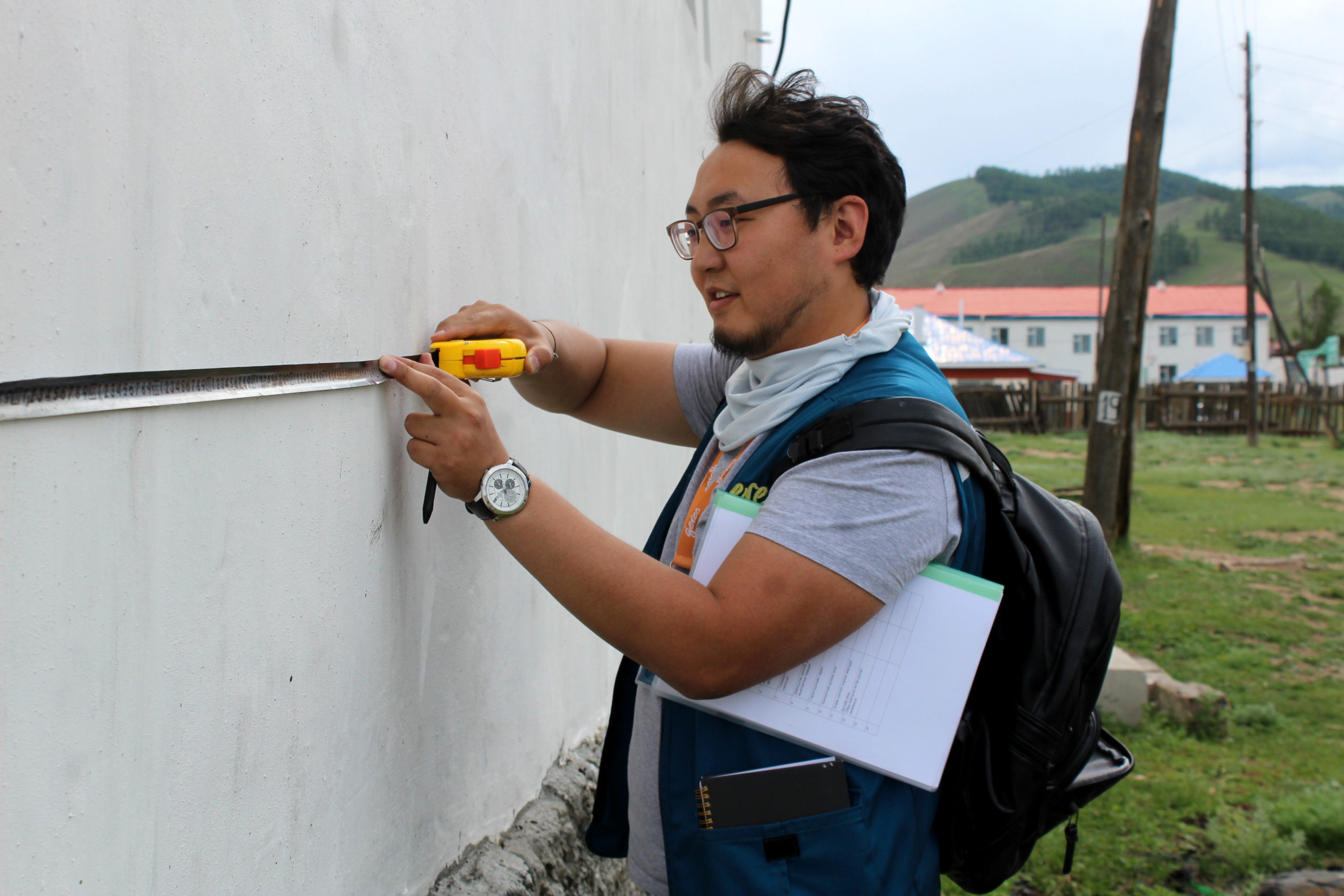
This project, whose action program runs from 2019 to 2021, aims at improving education conditions in schools in Arkhangai by optimizing the energy efficiency of buildings.
Context and challenges
The Arkhangai Province is a predominantly rural area located in the heart of the Khangai Mountain in Mongolia. It is characterized by an extreme continental climate with hot summers and long, dry and extremely cold winters.
Geres has been working in Arkhangai since 2012 in partnership with civil society and local authorities. A Community-based study and awareness and capacity building activities has shown that global warming is a pressing reality for the Arkhangai population.
Over-reliance on coal for heating and cooking purposes is a key factor to Greenhouse Gases emissions and strongly contributes to air pollution. Related health problems disproportionately affect children, pregnant and lactating women, and elderly.
Most public buildings (educational, health, social, administration) don’t comply with insulation standards, offering very poor comfort to their occupants.
The pilot construction of an energy-efficient bioclimatic building housing a safe house for victims of domestic violence in the provincial capital, carried out by Geres in 2018- 2019, has shown the interest and relevance of this type of construction to reduce the consumption of coal dependence, energy expenditure and improve the living conditions of users.
Objectives and solutions
In order to contribute to reduce carbon footprint and increase resilience to climate change through an inclusive energy transition in Arkhangai province this project focuses on three complementary axes:
- Pilot interventions in educational buildings demonstrating the feasibility and relevance of improving energy efficiency in public buildings to improve the comfort and well-being of occupants and users, reduce energy savings expenses and reduce air pollution.
- The gradual rise in skills of professionals in the buildings sector, allowing the emergence of a local supply of solutions related to energy efficiency sustainable energy services.
- Raising awareness of territorial stakeholders (public authorities, associations, citizens, etc.), strengthening local institutions capacities for energy-climate planning.
Beneficiaries
- 700 school children and educational personnel will benefit from better thermal comfort
- 12,000 citizens aware of energy and climate issues
- 20 construction companies, more than 180 craftsperson and / or entrepreneurs supported
- 96,000 inhabitants of Arkhangai will, benefit from better local policies
- 400 elected officials and technicians from institutions, as well as 2 local associations strengthened on energy-climate issues
Technical partners
- Government of Arkhangai
- “Sustainable Future Development” association
- Provincial Union Builders NGO
FINANCIAL PARTNERS
You will want to bring down your image file size right down to the point before you notice a drop in quality. This is done through image compression. Most photo editors, plugins, and sites like tinypng.com compress images using lossless compression (which shrinks the image file without losing any image quality) and smart lossy compression (which decreases the size of the image file by reducing metadata and image quality in a way that isn’t really noticeable by the user).
 Engagé pour la solidarité climatiqueEn savoir plus

French Development Agency (AFD)
TO GO FURTHER
Project sheet
Public building’s energy performance certificate (Mongolian version)
The Energy Efficiency of Public buildings in Arkhangai Province CEMAATERR-II (English version)
The Energy Efficiency of Public buildings in Arkhangai Province (Mongolian version)
Final review : empowering local authorities to implement climate change & energy transition (English version)
WOULD YOU LIKE TO TAKE ACTION
AND SUPPORT WHAT WE DO?
Tell us who you are and find your means of action.
CITIZENS
Because Climate Solidarity is a challenge we face collectively, Geres gives you the possibility to make a difference. TAKE ACTION AS A CITIZENPRIVATE SECTOR
As a business executive, an employee or a customer, you have the power to take action in your everyday life. TAKE ACTION AS A COMPANYLOCAL AND INSTITUTIONAL ACTORS
Support our actions in France and internationally and become an agent of change at our side. TAKE ACTION AS AN INSTITUTIONFOUNDATIONS
By supporting Geres, you contribute to the implementation of innovative and concrete actions. TAKE ACTION AS A FOUNDATIONThe post Energy efficiency and thermal comfort of educational buildings in Arkhangai appeared first on Geres.
]]>Energy renovation of fragile housing in urban areas of Ulaanbaatar
Building on Geres’ 20 years of experience in Asia’s cold climate, the project “Switch off air pollution” (2018-2022), supported by the European Union, aims at offering affordable building retrofit solutions to households living in semi-informal areas of Ulaanbaatar in Mongolia by focusing on insulation, heating and cooking efficiency. The objective is to increase coal efficiency and thermal comfort for families while decreasing the dramatic air pollution in Ulaanbaatar.
Context and challenges
Mongolia is a vast country of open steppes, as big as Western Europe, where roam 90 million heads of livestock and only 3 million inhabitants. However, and this sound counterintuitive, population is largely urbanised and more than 50% of the population lives in Ulaanbaatar, with another 800.000 in provincial capitals.
The 8-month long heating season, temperatures hitting for several months -20 to -40°C and the absence of central heating systems for more than half of the urban population force them to rely on cheap and low-quality coal for satisfying household heating and cooking needs. This results in a dramatic situation of indoor and outdoor air pollution for all urban citizens. In terms of impact and specifically health impact, this might as well be the single largest challenge facing Mongolia currently.
Limiting fossil fuel consumption through improving the energy efficiency and decreasing heat loss of individual houses in the ger areas of the capital city is hence a key action to be undertaken to complement additional infrastructure and awareness raising projects aimed at reducing air pollution in the city, thus contributing to the reduction of respiratory infections, limiting the financial burden of excessive fuel consumption and eventually mitigating climate change effects.

OBJECTIVES AND SOLUTIONS
“Switch off air pollution” project is a coordinated initiative lad by Geres with People in Need, the Mongolian National Construction Association and Mongolian University of Science and Technology’s Building Energy Efficiency Centre, in close collaboration with Ulaanbaatar Municipality and GCF funded Xac Bank green loan initiative, aiming at equipping communities and private sector with the tools to curve air pollution in Mongolia.
With broader goal to improve housing energy efficiency through the design and implementation of context-based technical solutions for the construction sector, the resort to advisory services and financial intermediation, the project aims to contribute to the addition of more sustainable consumption and building patters and behaviours.
Following a comprehensive market approach for further replication and upscaling, the project intends to:
- Increase awareness of communities and households to pollution challenges and the health and economic advantages of energy efficiency
- Define appropriate and low-tech technical solutions for energy efficient dwellings, designed and shaped for dissemination to construction professionals and households
- Train and support construction MSMEs to sell and set-up energy efficient retrofit
- Define, support and provide financial intermediation services to link clients (households or SMEs) to green credit schemes such as current GCF funded XAC Bank green retail loan products.
- Further disseminate gender-informed Energy efficient solutions, perspectives and practices with the support of all stakeholders (loan officers, energy advisors, authorities) via targeted awareness raising activities.
Ultimately, it is expected that the project will pilot a system that could see systemic change, pending further replication, in:
- The overall improvement of health through the promotion of more sustainable energy consumption patterns and behaviors in the individual housing sector.
- The lasting reduction in coal and overall energy consumption and emissions of CO2 and particulate matters in ger districts and beyond.
Partners
Financial partners
- A grant from European Union, SWITCH Asia Sustainable Consumption & Production programme, co-funded by Foundation Abbé Pierre and CzechAid
Implementing partners
- SOAP is implemented by Geres together with People in Need INGO and with its national partners, Mongolian National Construction Association and Mongolian University of Science and Technology’s Building Energy Efficiency Centre
Switch Off Air Pollution video
FINANCIAL PARTNERS

French Development Agency (AFD)

Abbé Pierre Foundation
Since 2011, the Abbé Pierre Foundation has supported our work to combat energy poverty through improving the housing of poor communities in Central Asia.
DOCUMENTS TO DOWNLOAD
Baseline study brief report
Switch Off Air Pollution Factsheet
Switch Off Air Pollution Factsheet (mongolian)
Analysis on Household socio-economic survey by the National Statistical Office (English)
Analysis on Household socio-economic survey by the National Statistical Office (Mongolian)
Baseline study report (English)
Baseline study report (Mongolian)
Qualification of existing habitat and heating sources (English)
Qualification of existing habitat and heating sources (Mongolian)
The research report (English)
The research report (Mongolian)
The Infographic
WOULD YOU LIKE TO TAKE ACTION
AND SUPPORT WHAT WE DO?
Tell us who you are and find your means of action.
CITIZENS
Because Climate Solidarity is a challenge we face collectively, Geres gives you the possibility to make a difference. TAKE ACTION AS A CITIZENPRIVATE SECTOR
As a business executive, an employee or a customer, you have the power to take action in your everyday life. TAKE ACTION AS A COMPANYLOCAL AND INSTITUTIONAL ACTORS
Support our actions in France and internationally and become an agent of change at our side. TAKE ACTION AS AN INSTITUTIONFOUNDATIONS
By supporting Geres, you contribute to the implementation of innovative and concrete actions. TAKE ACTION AS A FOUNDATIONThe post Energy renovation of fragile housing in urban areas of Ulaanbaatar appeared first on Geres.
]]>Promoting the role of women in rural economic development in Mongolia
The objective of the IMPACT project is to support women empowerment in the agricultural productive system in the provinces of Arkhangai and Khentii. This program of action (2019-2022) is financially supported by the European Union and the Raja Danièle Marcovici Foundation.
Context
Rural areas of Mongolia, a country with an extreme continental climate, face social and
environmental challenges exacerbated by climate change, such as overgrazing and
rangeland degradation, desertification, and difficulties to locally produce vegetables,
generating nutritional deficiencies affecting in particular children and women.
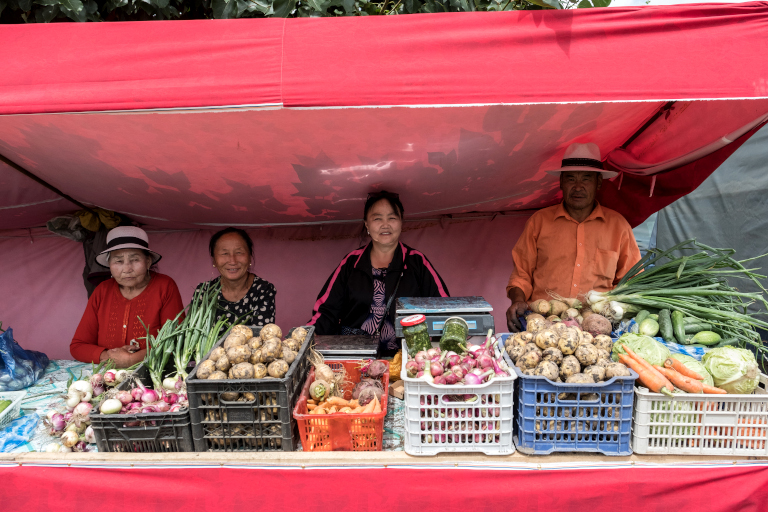
Khentii and Arkhangai provinces have a rural population of 140,000 people, 80% of whom derive their livelihood from the agricultural sector that is to a large extent underdeveloped.
In transition towards a free market, herders and small-scale Mongolian farmers have
difficulties to adjust their productive systems to create value, preserve their natural
resources and altogether secure their livelihoods and resilience to climate change.
Within this patriarchal agro-pastoral rurality, women’s place and role remain fragile
and lacks mainstreaming and mentoring schemes. Women suffer from limited access
to natural resources, financial services, and property.
They are mainly involved in informal and unpaid family work schemes and household tasks, and are not involved in community and collective decision-making. Like other members of the population, women are concerned by issues of transition and resilience, and wish to participate in sustainable local development.
Objectives and solutions
To meet these challenges, and based on their field experience, the MONES, Geres and
AVSF consortium is working for an inclusive and sustainable rural economic development
following two major levers:
- Support agricultural activities with high added value: sustainable cashmere and
local vegetable production, through the dissemination of energy-efficient and
environmentally friendly solutions, and promotion of sustainable natural resources
management and production practices. - Empower women as key drivers of change in local development by promoting their role
to work on par with men and local authorities in their productive activities and in the
policy making process in Mongolia. In turn, including men into strong advocates and
supporters of women’s role in rural economic development.
Technical partners
- AVSF – Agronomes et Vétérinaires Sans Frontières: they have been supporting Mongolian herders since 2004.
- MONES – Mongolian Women’s Fund: they are a Mongolian organization that promotes women’s empowerment.
Our actions in video
Our actions in Khentii in pictures

FINANCIAL PARTNERS


RAJA-Danièle Marcovici Foundation
The RAJA-Danièle Marcovici Foundation supports action in favour of women, particularly via training and professional integration. The Foundation has placed its trust in us since 2012, supporting work in Benin and later in Myanmar to promote women's entrepreneurship in the energy sectors.
DOCUMENTS TO DOWNLOAD
WOULD YOU LIKE TO TAKE ACTION
AND SUPPORT WHAT WE DO?
Tell us who you are and find your means of action.
CITIZENS
Because Climate Solidarity is a challenge we face collectively, Geres gives you the possibility to make a difference. TAKE ACTION AS A CITIZENPRIVATE SECTOR
As a business executive, an employee or a customer, you have the power to take action in your everyday life. TAKE ACTION AS A COMPANYLOCAL AND INSTITUTIONAL ACTORS
Support our actions in France and internationally and become an agent of change at our side. TAKE ACTION AS AN INSTITUTIONFOUNDATIONS
By supporting Geres, you contribute to the implementation of innovative and concrete actions. TAKE ACTION AS A FOUNDATIONThe post Promoting the role of women in rural economic development in Mongolia appeared first on Geres.
]]>Arkhangai, a pilot province to address climate change and energy challenges
The first phase of the CEMAATERR program, which successfully spanned from 2017 to 2019, aimed at raising awarness and supporting Arkhangai in mainstreaming adaptation and mitigation challenges in local policies and plans.
Context and challenges
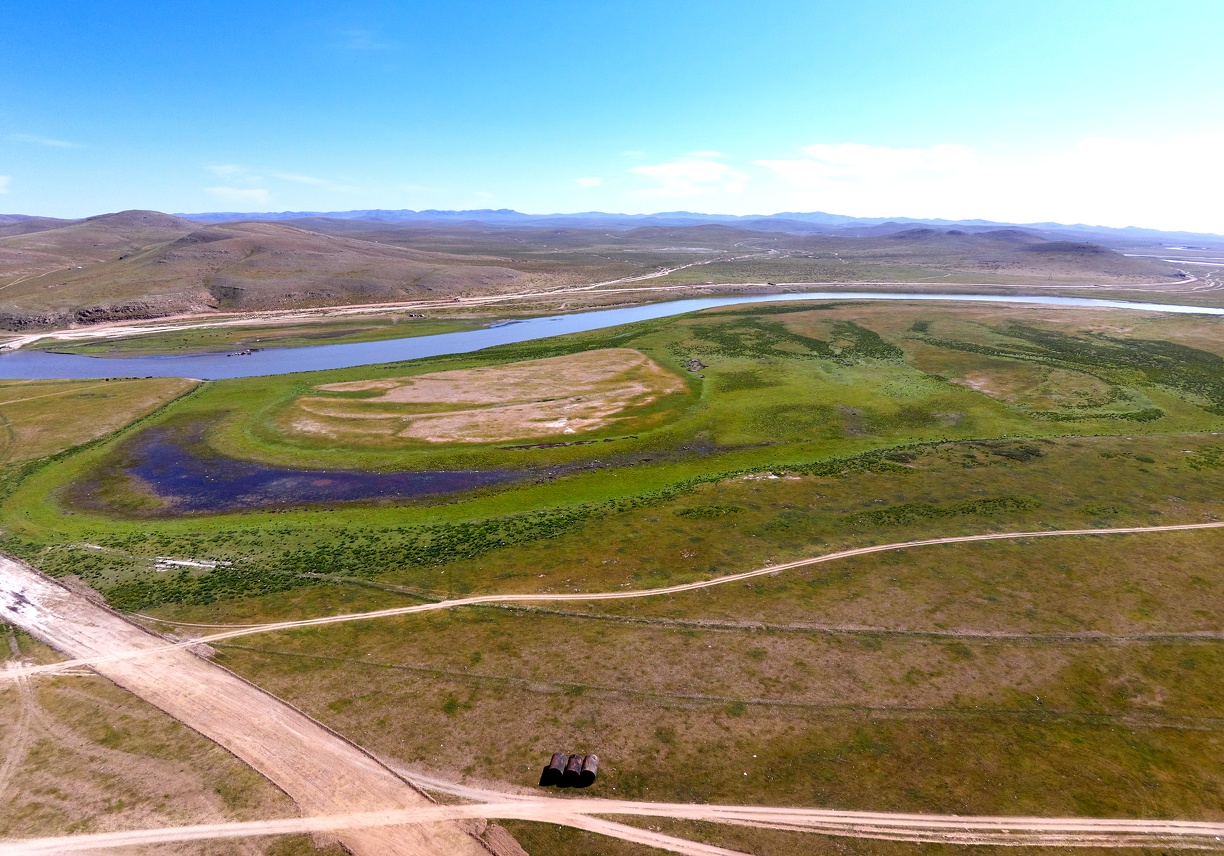
Mongolia’s climate can be described as highly continental with warm summers and long, dry and extremely cold winters. The average temperature rate varies between -26°C in January to +28°C in July.
Extreme fluctuations in both temperature and precipitation, are accentuated by the country’s topographical diversity. Located in central Mongolia, on the northern slopes of the Khangai Mountains, Arkhangai Aimag has water resources with large rivers providing the potential for clean energy source and water collection. The annual average precipitation rate is 232.3 mm.
Climate projections of +3°C from 2040 to 2059 and +6°C from 2080 to 2099 tend to confirm the existing global warming trends with potentially disastrous consequences for Arkhangai local communities.
OBJECTIVES AND SOLUTIONS
In order to identify the Aimag’s main vulnerabilities to climate change, a community-based climate Vulnerability Risk Assessment (CVRA) was conducted in a participatory approach.
The main results have put in evidence that Arkhangai has been facing global warming since 1985 with seasonal disparities. Local people are extremely aware of the changing climate and weather patterns. They feel negative changes in the pasture, forest, and water resources, which affect their living conditions.
Faced with an increase in such climatic variations and their consequences, as well as with highly vulnerable local populations, incorporating these issues into territorial planning is a priority. This means strengthening the resilience of populations in both rural and urban areas, as well as systematically intervening.
However, there is little understanding or incorporation of future climate constraints at local level and there is a lag between official national commitments and local implementation.
PARTNERS
Technical partners
- GER Community Mapping Center (GCMC): GCMC has carried out numerous needs diagnostics with community participation. The team consists of experts in community development, the use of geographic information (mapping and GIS) and the development of public and urban planning policies.
Financial partners
- French Development Agency (AFD)
DOCUMENTS TO DOWNLOAD
ENERGY EFFICIENCY AND THERMAL COMFORT OF EDUCATIONAL BUILDINGS
Community-based Climate Vulnerability and Risk Assessment of Arkhangai
Climate-energy approach in the Arkhangai
Arkhangai climate change vulnerability atlas
WOULD YOU LIKE TO TAKE ACTION
AND SUPPORT WHAT WE DO?
Tell us who you are and find your means of action.
CITIZENS
Because Climate Solidarity is a challenge we face collectively, Geres gives you the possibility to make a difference. TAKE ACTION AS A CITIZENPRIVATE SECTOR
As a business executive, an employee or a customer, you have the power to take action in your everyday life. TAKE ACTION AS A COMPANYLOCAL AND INSTITUTIONAL ACTORS
Support our actions in France and internationally and become an agent of change at our side. TAKE ACTION AS AN INSTITUTIONFOUNDATIONS
By supporting Geres, you contribute to the implementation of innovative and concrete actions. TAKE ACTION AS A FOUNDATIONThe post Arkhangai, a pilot province to address climate change and energy challenges appeared first on Geres.
]]>Agricultural self-sufficiency and balanced nutrition for the rural population of Khangai
From 2010 to 2013, Geres is involved to supporting the development of market gardening in Mongolia and the implementation of a more balanced diet.
Context and challenges
The sedentarization of nomads in search of job opportunities creates pockets of poverty in small urban centers.
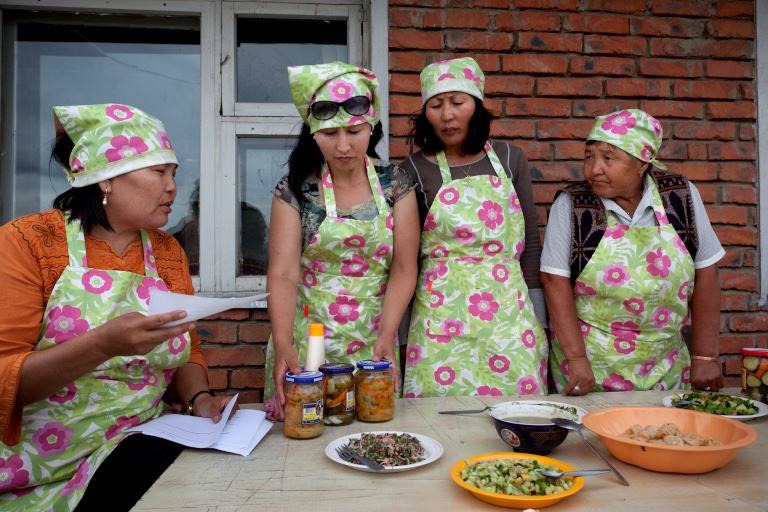
The rapid changes in lifestyle contribute to a growing demand and interest in locally-produced vegetables.
The local vegetable production and the local offer are limited due to harsh climatic conditions and the supplies imported from China turn out to be expensive and of poor quality when they reach rural markets.
Since 2012, in Arkhangai, the passive solar greenhouses developed by Geres have demonstrated their efficiency.
The 16 producer groups supported can now produce vegetables from mid-March until at least late November.
Objectives and solutions
Since 2010, in Mongolia, Geres has been involved in supporting the development of vegetable production with the following goals:
- Create jobs opportunities and generate incomes for farmers by enhancing vegetable production in the Khangai region and by supporting the sale of high-added value vegetables in short-value chains through the introduction of passive solar greenhouses and a set of technical and business trainings.
- Improve rural food security by enhancing the availability and accessibility of fresh vegetables throughout the year thanks to the diversification and extension of the growing period.
- Promote balanced diets enriched in vitamins to improve health of rural inhabitants. The Khangai inhabitants will improve their nutrition by increasing their intake of micro-nutrient rich foods, particularly vegetables.
Partners
Financial partners
- Fondation d’entreprise Louis Dreyfus
- Principauté de Monaco
Technical partners
- Agronomes et Vétérinaires Sans Frontières (AVSF)
WOULD YOU LIKE TO TAKE ACTION
AND SUPPORT WHAT WE DO?
Tell us who you are and find your means of action.
CITIZENS
Because Climate Solidarity is a challenge we face collectively, Geres gives you the possibility to make a difference. TAKE ACTION AS A CITIZENPRIVATE SECTOR
As a business executive, an employee or a customer, you have the power to take action in your everyday life. TAKE ACTION AS A COMPANYLOCAL AND INSTITUTIONAL ACTORS
Support our actions in France and internationally and become an agent of change at our side. TAKE ACTION AS AN INSTITUTIONFOUNDATIONS
By supporting Geres, you contribute to the implementation of innovative and concrete actions. TAKE ACTION AS A FOUNDATIONThe post Agricultural self-sufficiency and balanced nutrition for the rural population of Khangai appeared first on Geres.
]]>Passive Solar Greenhouses in Mongolia
Since 2010, Le Geres has been supporting the inhabitants of rural areas in Mongolia in the construction of bioclimatic greenhouses. Without the help of photovoltaic panels, these greenhouses use the light resource that is abundant in the country.
Context and challenges
In Mongolia, passive solar greenhouses start their first agricultural season with success.
Mongolia is a peculiar country. Far away from ocean, Mongolia extends upon vast steppes lined with imposing mountains, where an extreme continental climate is dictating the rules. Cold weather intensified by strong wind and very low precipitations are making this country an incredibly hostile land towards any human activities.
Agriculture has always been a huge technical challenge. Temperatures are extreme during winter and cold season lasts very long. During the coldest times, in January and February, average temperatures fluctuate between -20°C and -30°C (until -40°C). In order to compare, average temperatures in Leh for the same period are between -3°C and -14°C, with a minimum of -25°C. During more than six months, temperatures are not exceeding 0°C. For consequence, the growing season is very short : 100 to 150 days annually.
However, Mongolia is also the “Blue Sky Country” with more than 250 days of sunshine each year. This represents a great opportunity regarding passive solar techniques and more especially passive solar greenhouses (PSGH).
Mongolians’ diet is little diversified and suffers from deficiencies. It is essentially based on meat and dairy products because of the old – nevertheless still very present – nomad-breeders tradition. Vegetables consumption is very low (1/4 of the WHO recommended quantity) and it is in fact essentially potatoes.
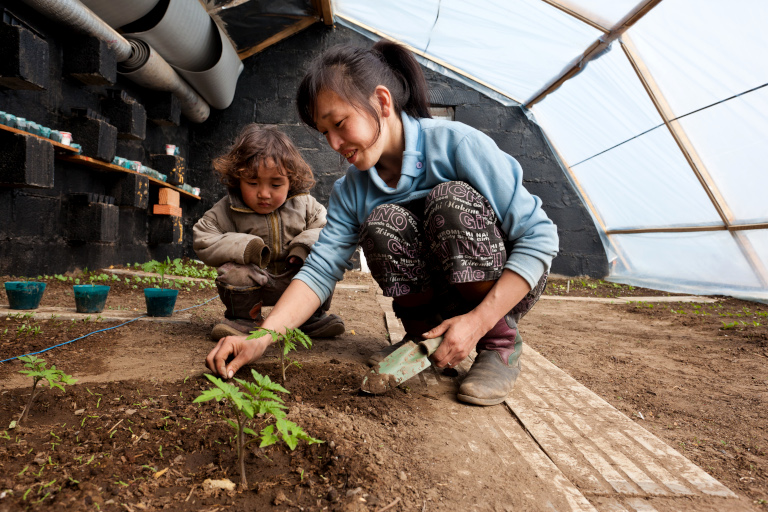
The Solar Passive Greenhouses project
The food security plan’s objective (2010-2013) lead by the consortium Secours Catholique/Caritas Mongolia and Geres is to develop more efficient and diversified ways to grow vegetables at household level in order to reduce food insecurity which affects the most vulnerable families (1,000 families in Ulaanbaatar and in Gobi-Altai province).
Activities are intended to develop, implement and diffuse passive solar greenhouses (180 greenhouses and 75 nurseries), improved techniques of soil and water management and bioclimatic cellars (100 cellars).
Geres is bringing its technical expertise to the local partner during the first research and development phase on these 3 techniques.
New passive solar greenhouses designs have been developed for peri-urban areas of Ulaanbaatar.
In Autumn 2010, a Research and Display Center has been built in the middle of a yurt area. This Center counts 2 research greenhouses (with a more efficient design regarding thermal technology), a display family greenhouse designed to be diffused to beneficiaries and 2 nurseries.
In this early spring, greenhouses are starting their first full growing season. Thermal and agronomic performances tested since last autumn are revealing first results that meet our expectations.
Research greenhouses can be used from late February to early December. Growing season can be extended to 12 months for bulb vegetables which can spend the winter in soil with a revival in February. We have to keep in mind that atmospheric pollution in Ulaanbaatar reduce winter solar radiations.
Family greenhouses can be used from mid-March for direct hardy vegetables seedling (radish, lettuce, turnip, spinach). These cultivations have a good germination even with low soil temperatures (5/7°C) and can withstand light negative night temperatures.
Family greenhouses can be used from the 1st of April for sensitive vegetables/fruits transplantation (tomatoes, cucumber, sweet pepper). There is no more risk regarding night frost (felt can be used to protect plants in case of chill) and temperature becomes favourable to their growth (higher than 18°C). At this date, greenhouses generally used in Ulaanbaatar are frozen and start to be used from mid-May.
Spring is a critical period regarding food security ; thanks to these greenhouses, Ulaanbaatar families will be able to consume fresh and nutritive vegetables starting from mid-April (short-cycle vegetables : radish/lettuce).
Prospects
Thermal results will allow us to compare the different designs performances and suggest relevant optimizations. The main objective for 2011 as regards to agronomic experimentations is to suggest a new schedule for farmers, which will be adapted to this longer cultivation season, in order to make a better use of the opportunity offered by the passive solar greenhouses. Passive Solar Greenhouses represent a new technology in Mongolia and have aroused a big interest from Non-Governmental Organizations (NGOs) as well as governmental ones, since the project beginning. That shows promise for this resource’s development in the country.
Partners
Technical partners
- Arkhangai Herders Federation
- AVSF – Agronomes et Vétérinaires Sans Frontière
- Arkhangai Government
- Food and Light Industry Government of Gobi-Altai province
- Secours Catholique
- Caritas Mongolia
Financial partners
- European Union
- DCI Monaco
- Humus Endowment Fund
- Synergie Dolaire Endowment Fund
WATCH THE PROJECT VIDEO
Passive Solare Greenhouses in Mongolia
WOULD YOU LIKE TO TAKE ACTION
AND SUPPORT WHAT WE DO?
Tell us who you are and find your means of action.
CITIZENS
Because Climate Solidarity is a challenge we face collectively, Geres gives you the possibility to make a difference. TAKE ACTION AS A CITIZENPRIVATE SECTOR
As a business executive, an employee or a customer, you have the power to take action in your everyday life. TAKE ACTION AS A COMPANYLOCAL AND INSTITUTIONAL ACTORS
Support our actions in France and internationally and become an agent of change at our side. TAKE ACTION AS AN INSTITUTIONFOUNDATIONS
By supporting Geres, you contribute to the implementation of innovative and concrete actions. TAKE ACTION AS A FOUNDATIONThe post Passive Solar Greenhouses in Mongolia appeared first on Geres.
]]>